
Interior/Exterior Paint: Why Using the Right One Actually Matters
Key takeaways
- Interior and exterior paints have different formulations for good reason.
- Using the wrong paint leads to early failure, not just poor looks.
- Exterior paint indoors can off-gas and cause ventilation problems.
- Transitional surfaces like porches need careful product selection.
- Proper preparation matters as much as the paint you choose.
They look similar in the tin, but they're formulated differently
Interior and exterior paints share pigments and a liquid base, but their formulations are built for different conditions. Exterior paint is designed to flex, resist UV, and shed water. Interior paint prioritises a washable, low-odour finish in a stable indoor environment. Using one where the other belongs causes problems.
The tin might look the same on the shelf, but the formulation is doing a completely different job.
Exterior products contain additives that handle temperature swings, rain, and direct sunlight. Interior products are made to hold a clean finish in rooms where you live and breathe.
The difference matters most because paint failure is rarely obvious until it's well underway. Peeling, flaking, or early staining often trace back to a product used in the wrong setting rather than a poor application.
The tin might look the same on the shelf, but the formulation is doing a completely different job.
What makes exterior paint suited to outside surfaces
Exterior paints are formulated to flex slightly as surfaces expand and contract with heat and cold. That flexibility stops the film cracking when a timber board or render face moves through seasonal temperature changes.
They also include biocides to resist mould and algae, which settle quickly on north-facing walls and shaded render in Brighton & Hove's coastal climate. UV stabilisers slow the breakdown of colour in direct sun.
Masonry paint for render adds another layer of consideration; it needs to be breathable so moisture vapour can pass through the wall rather than being trapped behind the paint film.
What goes wrong when you use the wrong paint for the job
Interior paint used outside breaks down within a season, losing adhesion and colour as it can't handle moisture or UV. Exterior paint used inside is a different problem: the biocides and solvents are formulated for ventilated conditions, and in a closed room they can cause fumes and take far longer to off-gas safely.
The most common DIY mistake is using leftover interior emulsion on a sheltered outdoor surface, assuming it will hold because the wall stays fairly dry. It won't; moisture still moves through masonry and behind paint films even when rain doesn't hit directly.
Exterior masonry paint on interior walls is less common, but it does happen. The finish is often coarser, adhesion on plaster can be unpredictable, and the odour in a poorly ventilated room is a real concern.
For internal decorating work, using the right interior product from the start means a finish that's easier to live with and easier to maintain. My post on internal house painting covers what that process looks like in practice.
Which one do you actually need, and where does it get complicated
For most surfaces the answer is straightforward: paint rooms with interior products and exterior walls with exterior ones. It gets more complicated at transitional surfaces, shared soffits, bay windows, and porches, where one surface is partly exposed and partly sheltered. Those are the spots where product choice genuinely needs thought.
A fully enclosed living room is simple; so is an exposed rendered front elevation. The grey area is anywhere the boundary between inside and outside blurs.
Porches are a good example. The ceiling may be sheltered but still exposed to damp air and temperature swings. The walls might be half internal plasterboard and half masonry facing out. Each surface warrants its own product decision.
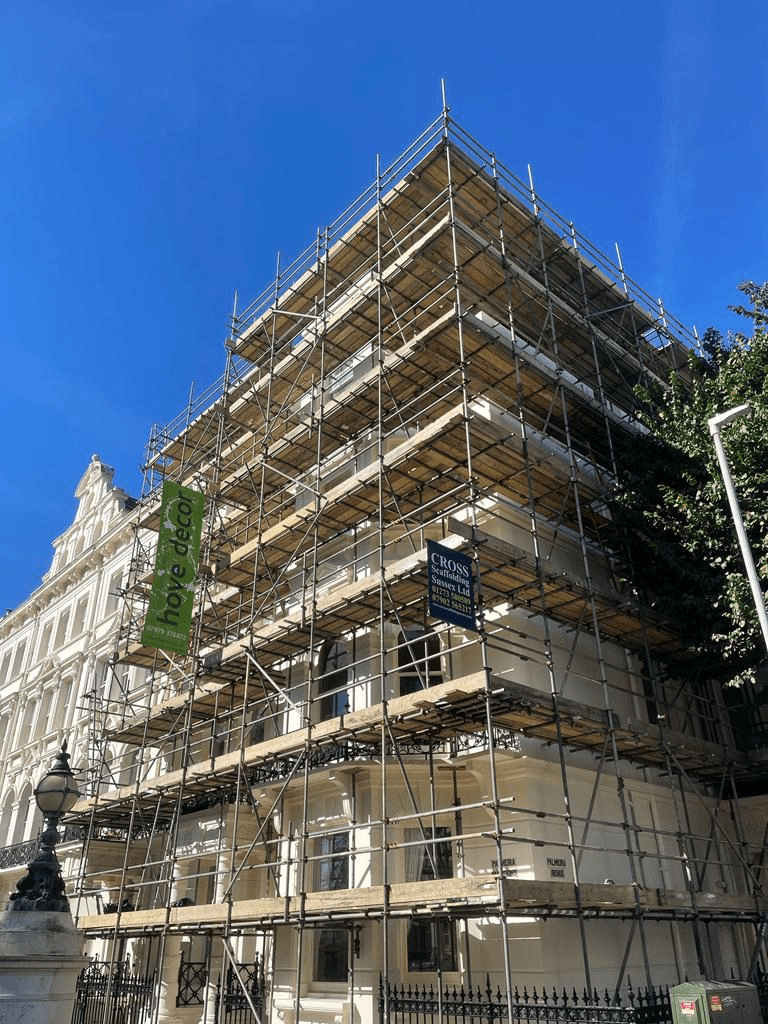
Being a specialist in period and Regency properties, including render, masonry and sash windows, means I see these transitional surfaces regularly. Getting the product selection right at the start is far easier than stripping back a failed finish later.
Surfaces where homeowners in Brighton & Hove sometimes get caught out
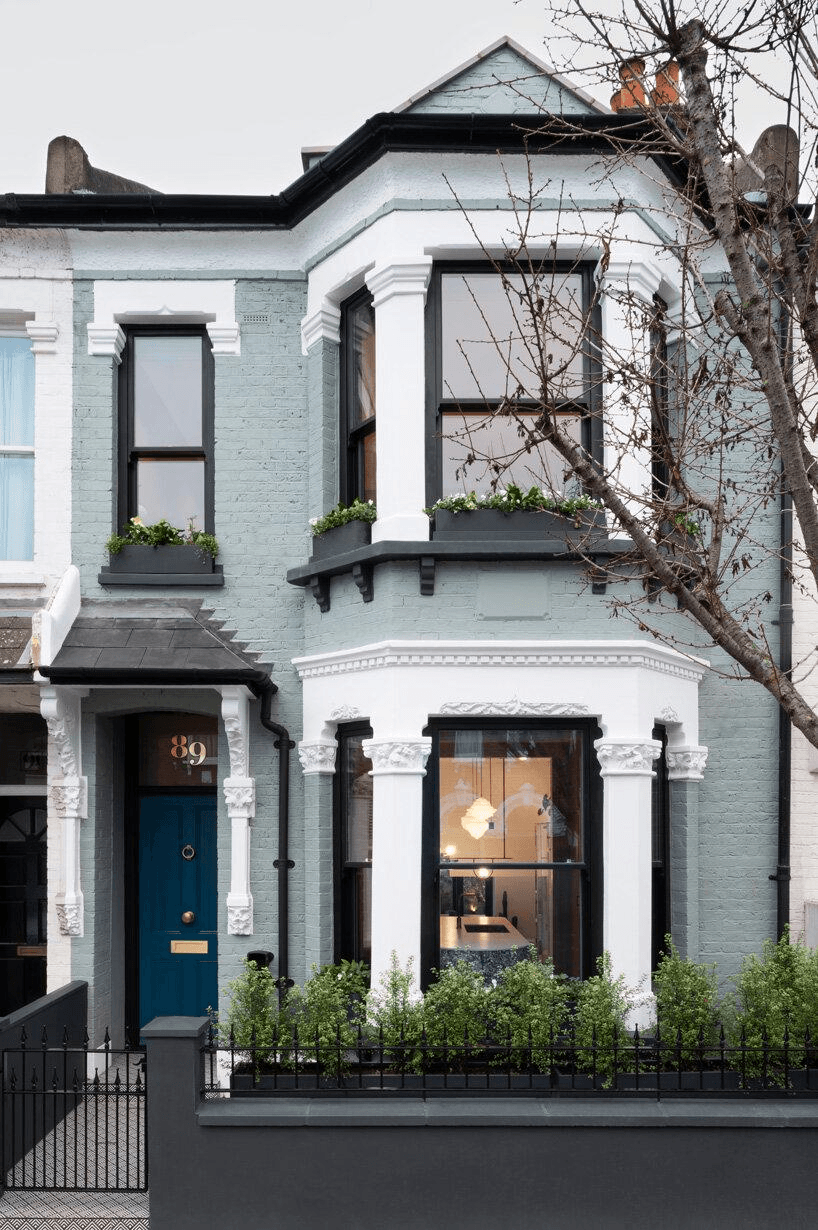
Bay windows are a frequent one. The external faces and sills clearly need exterior paint, but the internal reveals and linings are inside the heated envelope of the house; they need an interior product, properly primed where bare wood is exposed.
Rendered front elevations on period properties need a breathable masonry paint, not a standard exterior emulsion. Trapping moisture behind a non-breathable film on Victorian or Edwardian render leads to bubbling and spalling, which is a much bigger job to put right.
Soffits and fascias are another area where people reach for whatever's open. Timber soffits need a proper exterior primer and topcoat that flex with the wood; a standard interior vinyl emulsion will crack and peel within a year.
If you're unsure about a specific surface, drop me a message or call for a quote and I'll give you a straight answer.
- Bay window reveals: exterior paint on sills and faces, interior product on internal linings
- Rendered period elevations: breathable masonry paint, not standard emulsion
- Timber soffits and fascias: exterior primer and flexible topcoat
- Porches: assess each surface individually depending on exposure
Frequently asked questions
Can I use exterior paint inside to get a tougher finish?
It's not a reliable option. Exterior paints contain biocides and other additives formulated for open-air use. Indoors, with limited ventilation, those components can off-gas for much longer than interior products. The finish is also often coarser and harder to apply cleanly on plaster. For a durable interior finish, there are interior paints specifically designed for high-traffic areas, hallways, and kitchens that hold up well without the risks.
Is interior/exterior paint a real product, or just a marketing label?
Some manufacturers do produce dual-rated products, usually for surfaces like timber that span both environments. They're a reasonable compromise in genuinely transitional situations. That said, a paint formulated specifically for exterior masonry will outperform a dual-rated product on an exposed rendered wall, and a dedicated interior emulsion will give a better finish inside. Dual-rated products are useful in the right place, but they're not a universal shortcut.
What paint should I use on a surface that spans both inside and outside, like a porch or bay window?
The honest answer is: treat each surface individually rather than using one product across the whole area. For a bay window, the external sills, frames, and masonry need exterior products; the internal reveals and linings need interior ones. For a porch, assess each surface by its actual exposure. If you're not certain, it's worth asking a decorator before you buy materials. Getting the product right at the start saves a lot of remedial work further down the line.
More reading
Related service
Want this doing in your own place? See my exterior painting service across Brighton & Hove.