
Exterior House Wall Paint: What to Use and How to Make It Last in Brighton & Hove
Key takeaways
- Match the paint to the substrate: render, masonry and timber each need different products.
- Proper preparation matters more than the paint brand you choose.
- Flaking or damp patches must be fixed before any new coat goes on.
- Avoid painting in direct midday sun or when rain is forecast within 24 hours.
- A well-prepared coastal exterior should last several years before needing attention.
Choosing the right exterior house wall paint for your property
For most Brighton and Hove properties, a flexible, breathable masonry paint works best on rendered and brick surfaces. Coastal exposure means you need something with good water resistance that still lets moisture out. The wrong product traps damp and fails early, so matching paint to substrate is the first decision to get right.
A lot of the housing stock in BN1, BN2 and BN3 is Victorian or Edwardian, and much of it has been rendered at some point. Rendered walls expand and contract with temperature, so a flexible masonry paint rather than a rigid one is a reliable option here.
Brick that has never been painted is a different matter. Once you paint brick, you are committing to repainting it; a breathable, smooth or textured masonry product works well for this, but it is worth thinking through before you start.
For colour ideas and products that suit the local period style, the post on exterior paint ideas for Brighton and Hove homes is a good starting point.
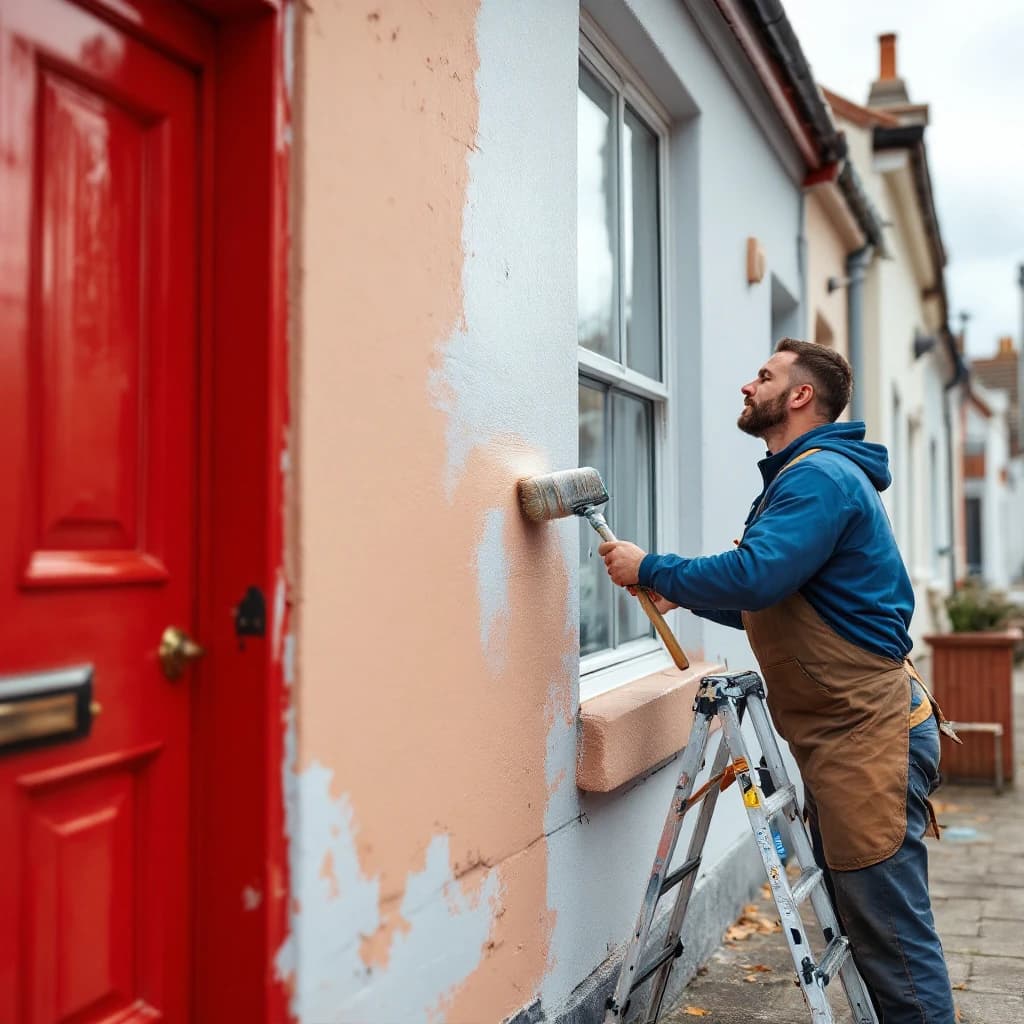
Proper preparation is what separates a finish that holds up for years from one that starts peeling by winter.
Render, masonry or timber: why the substrate matters
Render, brick, stone and timber all behave differently outdoors, so a single product rarely suits them all. Using a masonry paint on bare timber, or an exterior wood finish on a rendered wall, leads to early failure. Identifying what you are actually painting before buying anything saves time and money.
Render needs a paint that flexes with it and allows vapour to pass through; trap moisture behind a non-breathable coat and you will get blistering within a season or two.
Exposed timber, such as soffits, fascias or bay window frames, needs a dedicated exterior wood primer and topcoat system. This is separate from the masonry work and should not be rushed.
Mixed-substrate frontages are common on period properties here; a terraced house in Hove might have render on the upper floors, brick at ground level and a painted timber bay. Each area needs the right product. Reading a frontage properly is the first thing I do on any exterior painting job in Brighton or Hove.
- Render: flexible, breathable masonry paint
- Brick or stone: smooth or textured masonry paint
- Timber soffits, fascias, frames: exterior wood primer and topcoat
Why preparation decides how long exterior paint lasts
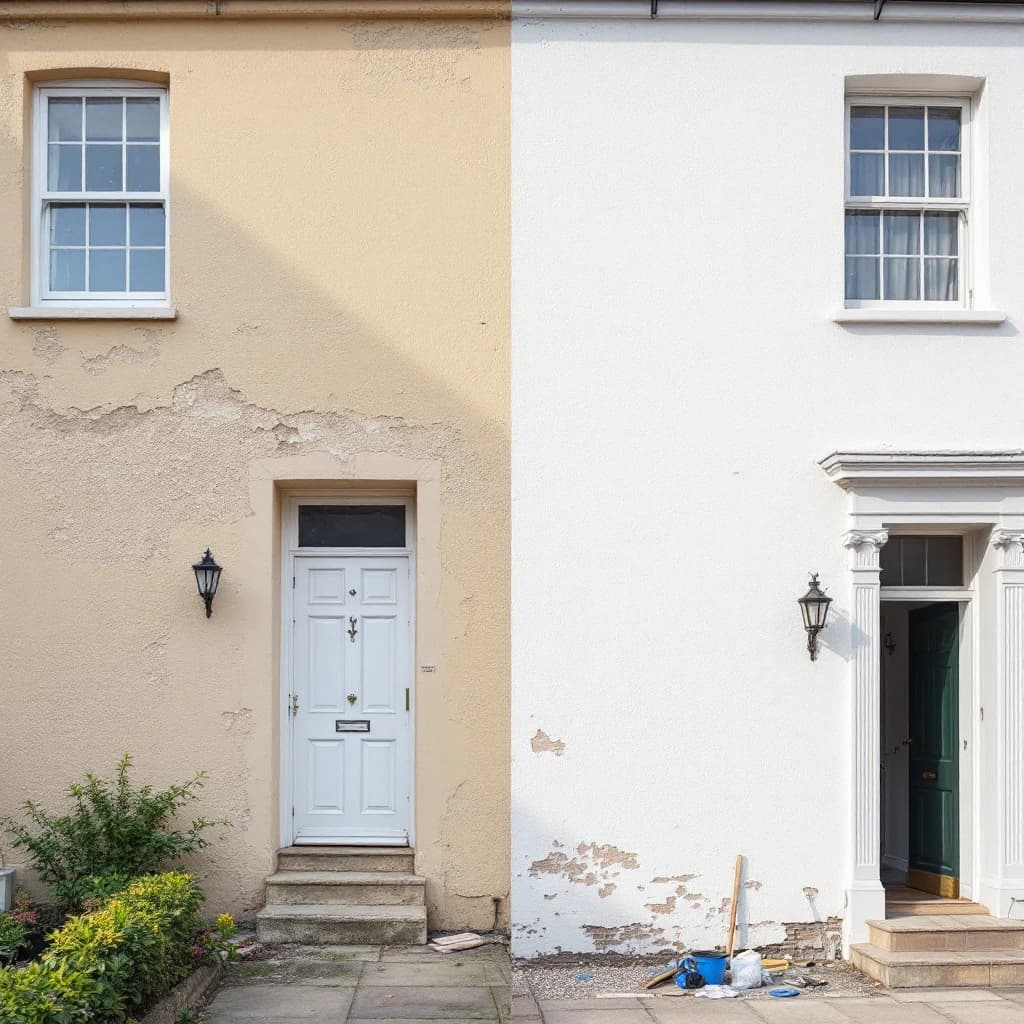
Proper preparation is what separates a finish that holds up for years from one that starts peeling by winter. Scraping loose material, treating cracks, priming bare patches and ensuring surfaces are clean and dry takes time, but it is the stage that determines everything. New paint applied over old failing paint fails just as quickly.
On a typical Brighton and Hove terrace, the prep alone can take longer than the painting. Flaking paint must come off; hairline cracks in render need filling with a flexible exterior filler before any topcoat goes on; and if there is any sign of damp or algae, those issues need addressing first.
Pressure washing is useful for clearing dirt and loose material, but the wall must be fully dry before paint is applied. Painting onto damp render is one of the most common reasons an exterior finish fails early.
As part of the exterior painting work I carry out across Brighton and Hove, preparation is never a stage I cut short. A coat of good masonry paint on a poorly prepared surface is money spent twice.
Getting the timing right: painting exterior walls in summer
Summer is a good time for exterior painting in Brighton and Hove, but a few conditions still matter. Paint should not go on in direct midday sun on a hot surface, and you need a dry window of at least 24 hours after application. Getting the timing right protects your investment in both preparation and product.
Most masonry paints have a working temperature range; applying in full sun heats the surface and causes paint to dry too quickly, which can lead to uneven coverage and poor adhesion. Early morning or late afternoon on a warm but overcast day is ideal.
Summer in this part of the coast can bring short sharp showers even in July and August. Check a reliable forecast and plan for a dry run of at least a day after each coat; some two-coat systems need longer between applications.
If you are planning an exterior repaint and want to get the job done properly this season, get in touch for a quote. A few details about the property and I can advise on timing, product and what preparation is needed.
Frequently asked questions
What is the best paint for exterior house walls in a coastal area like Brighton and Hove?
A flexible, breathable masonry paint is well suited to the rendered and brick properties common across BN1, BN2 and BN3. Coastal exposure means you need good water resistance combined with vapour permeability; products that trap moisture behind them tend to fail within a couple of seasons. Dulux Weathershield and Crown Fastflow are two options regularly used in this area. The right choice also depends on your substrate, so it is worth getting advice before buying.
How often should exterior house walls be repainted?
There is no fixed rule, but a well-prepared exterior in a coastal location like Brighton and Hove should last somewhere between five and eight years before needing serious attention. Factors that shorten that window include poor preparation, a product not suited to the substrate, or an exposed north or west-facing elevation taking the worst of the weather. A quick inspection each spring will tell you if any hairline cracks or flaking patches need dealing with before they spread.
Can exterior house wall paint be applied in direct summer sun?
It is best avoided. Direct sun heats the wall surface and causes the paint to skin over before it has bonded properly, which can lead to poor adhesion and uneven coverage. Early morning or late afternoon on a dry, warm day gives better results. Most masonry paint datasheets specify a surface temperature range; sticking to that is part of applying the product correctly.
More reading
Related service
Want this doing in your own place? See my exterior painting service across Brighton & Hove.