
Restoring a rotten sash window on a Brighton period home

Key takeaways
- Most sash window rot is localised to the bottom rail and cill and can be repaired without replacing the whole window.
- The repair only lasts if you cut back to sound, bare timber first. Filling over soft wood always fails.
- Ronseal Wet Rot Wood Hardener stabilises the surrounding timber before any filler goes in.
- For the rebuild I use Repair Care Dry Flex 16, a two-part system made for structural timber repair, not a general-purpose filler.
- On the coast, proper knotting, priming and an exterior finish are what make the repair hold for years, not months.
What a rotten sash window looks like, and when it can be saved
Most rot in a period sash window is localised to the bottom rail and the cill, where rain sits. In the majority of cases the window can be repaired in place with a wood hardener and a two-part timber filler, and the original joinery kept, rather than replaced with a modern unit.
Brighton and Hove is full of timber sash windows, and a lot of them are original to the house. On the Regency squares and the older terraces they are part of what makes the building what it is, so replacing them is usually the last thing you want to do, and on a listed building it may not be allowed at all.
The good news is that most rot is not as bad as it looks. Water tends to sit on the bottom rail and the cill, so that is where the timber goes soft first. The stiles and the upper sash are often still sound. If you press a screwdriver into the wood and it sinks in with no resistance, that section has gone. If it is firm, it stays.
I have repaired sash windows that the owner had already been quoted to replace, and kept the original frame for a fraction of the cost. The decision comes down to how much sound timber is left to build back onto, not how bad the paint looks.
- Soft, spongy timber on the bottom rail or cill that gives way under a screwdriver
- Flaking, blistered paint with dark staining underneath
- Gaps opening at the joints where the corners have moved
- A cill that holds water instead of shedding it
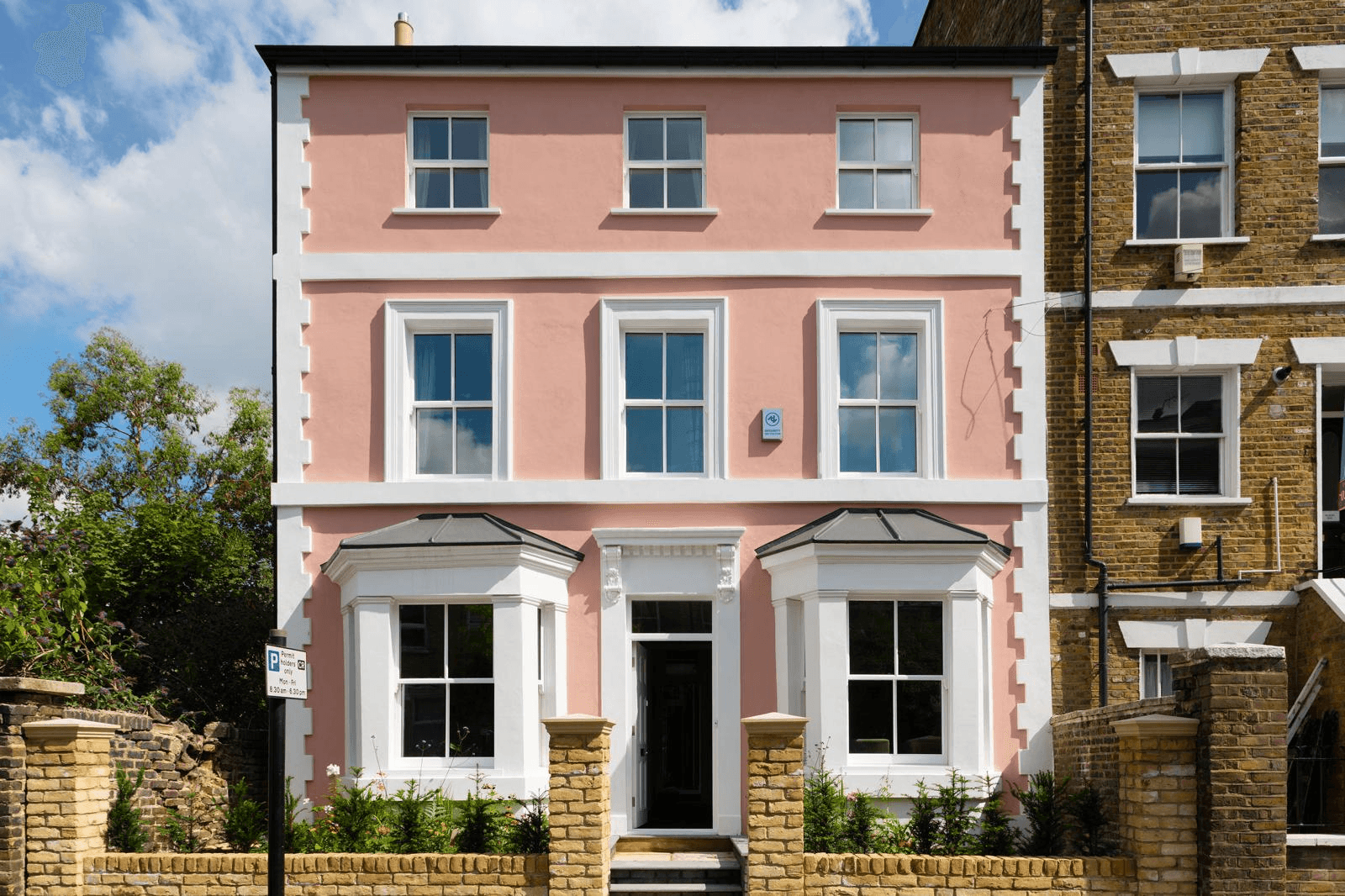
On a sash window, most of the job is what happens before the brush. Cut out every bit of soft timber and rebuild it properly, and the paint is the easy part.
Digging out the rot back to sound timber
The repair starts by raking out every bit of soft, rotten wood back to firm, bare timber. This is the step that decides whether the repair lasts. Filling over damp or soft wood traps the problem and it comes straight back through the new finish.
I take the old paint off the affected area and then rake out the rot with chisels and a scraper until I am into clean, sound timber all the way round. It always looks worse at this stage, because you are opening up the full extent of the damage rather than the little patch that showed through the paint.
The rule I work to is simple: if it is soft, it comes out. There is no point building a repair onto wood that is already failing, because the rot carries on underneath and lifts your work off within a season. I would rather take out more and rebuild it properly than leave a soft edge and hope.
Once it is cut back, the timber needs to be dry before anything goes on. On an exterior job that means picking a dry spell, which in a coastal town takes a bit of planning around the weather.
Wood hardener and two-part repair: the products I actually use
With the rot cut out and the timber dry, I stabilise the surrounding wood with Ronseal Wet Rot Wood Hardener. It soaks into the slightly softer fibres at the edge of the repair and binds them, so the new filler has something solid to key into rather than crumbling wood.
For the rebuild itself I use Repair Care Dry Flex 16. It is a two-part system made specifically for structural timber repair on windows and doors, not a general-purpose filler. It stays slightly flexible, so it moves with the timber as it expands and contracts through the seasons instead of cracking away from it, which is exactly what you want on a window that sits out in the weather. For smaller, shallower defects a good two-part high-performance wood filler does the job, but on a rebuilt bottom rail or a lost corner, the Repair Care system is what holds.
I build the repair slightly proud, let it cure properly, then shape it back with a plane and abrasives until it matches the original profile. Done right, you cannot see where the old timber ends and the repair begins.
- Ronseal Wet Rot Wood Hardener to stabilise the timber at the edge of the repair
- Repair Care Dry Flex 16, a flexible two-part system, for rebuilding rails and corners
- A quality two-part high-performance wood filler for smaller, shallower defects
- Shaped back to the original moulding once fully cured
Priming, filling the grain and a finish that lasts on the coast
Once the repair is shaped back, it needs knotting where there are any live knots, then a proper primer, before an exterior finish. On a coastal property the preparation is what makes the difference between a repair that lasts years and one that fails in a season.
Before any topcoat, I knot any live knots so resin cannot bleed through, then prime the bare timber and the repair so everything is sealed and working as one surface. Bare wood left unprimed under a topcoat is the most common reason a repaint fails early.
For the finish I use an exterior eggshell or gloss in the colour the house wants, building it up in proper coats rather than one thick one. Being on the coast, the salt air and driving rain are hard on exterior paintwork, so the prep and the number of coats matter more here than they would inland.
A sash window repaired this way holds for years, keeps the original character of the house, and costs a lot less than a replacement unit. If you have a sash window that is starting to go, I am fully insured and have been repairing and repainting period joinery across Brighton and Hove for around 20 years. Ask for an estimate with a couple of photos and I will come and take a look.
Frequently asked questions
Can a rotten sash window be repaired, or does it need replacing?
In most cases it can be repaired. Rot is usually localised to the bottom rail and cill where water sits, and as long as there is sound timber to build back onto, the window can be saved by cutting out the soft wood and rebuilding it with a wood hardener and a two-part timber repair system. Full replacement is only really needed when the damage is so extensive there is little sound timber left.
What is Repair Care and why use it instead of ordinary filler?
Repair Care is a two-part timber repair system designed specifically for windows and doors. Unlike a general-purpose filler, it stays slightly flexible, so it moves with the timber through the seasons instead of cracking and lifting away. On a structural repair like a rebuilt sash rail or a lost corner, that flexibility is what makes the repair last outdoors.
How long does a sash window repair last?
Done properly, back to sound timber, stabilised with a wood hardener, rebuilt with a two-part system and finished with a proper primer and exterior paint, the repair should last many years. The finish will want a maintenance recoat in time, as any exterior paintwork does, but the repair itself holds.
Do you work on sash windows in listed or conservation-area properties in Brighton and Hove?
Yes. A lot of Brighton and Hove sits in conservation areas, and many period homes have listed status. Repairing the original timber sash windows rather than replacing them is usually the right approach for these properties, and often the only one allowed. I work sympathetically so the window keeps its original character.
More reading
Related service
Want this doing in your own place? See my period & listed building restoration service across Brighton & Hove.