
Paint Walls or Woodwork First? A Decorator's View
Key takeaways
- Paint walls before woodwork in most rooms to simplify cutting in.
- Tackle woodwork first only when it needs heavy prep or repair.
- Always sand and clean woodwork between coats for a lasting finish.
- Proper masking is quicker than trying to cut a perfect freehand line.
- Ceiling, then walls, then woodwork is the reliable sequence to follow.
Why the order you paint in actually matters
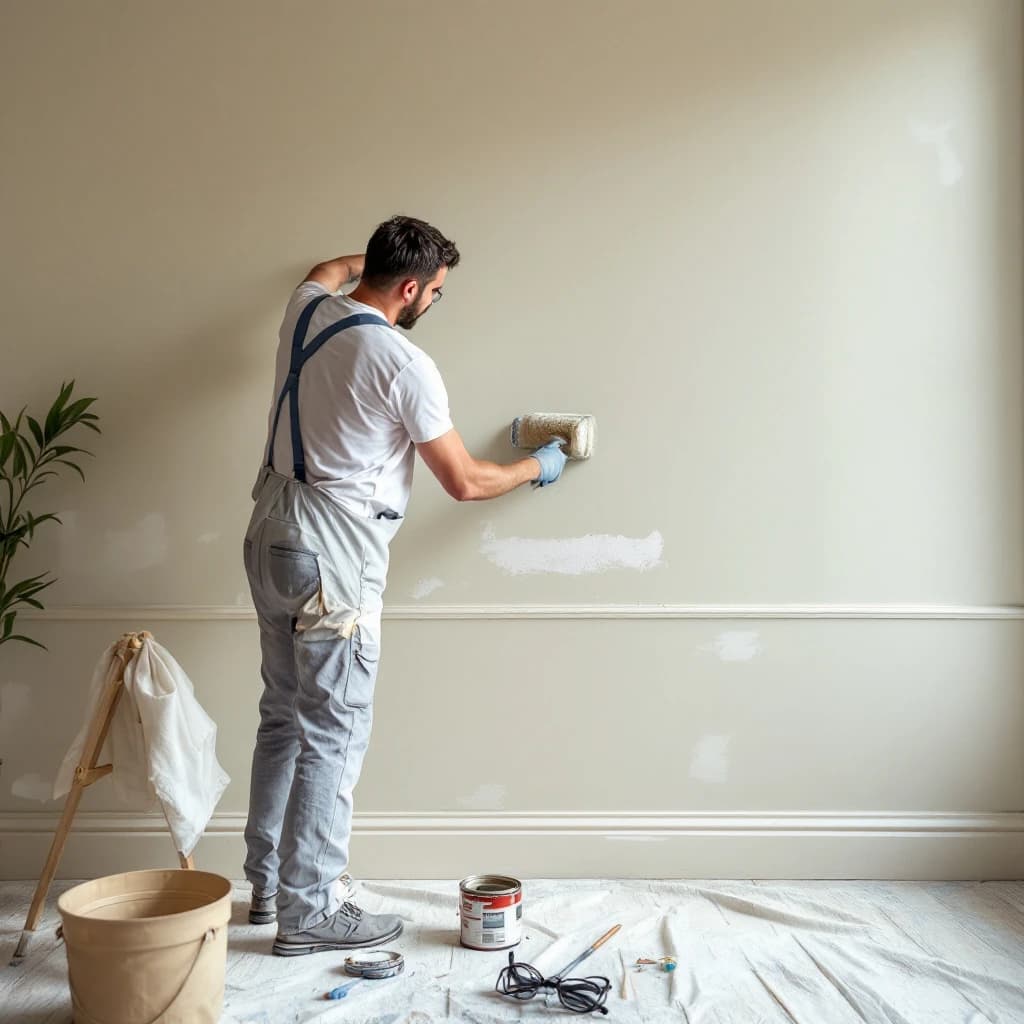
Paint the ceiling first, then walls, then woodwork. That sequence lets each stage lap slightly over the last without ruining finished surfaces. Get it backwards and you spend time repainting edges you already completed. The order is not a personal preference; it follows the logic of how paint overlaps and dries.
Most of the mess in a room comes from the ceiling and walls. Roller spatter lands on skirting boards, emulsion catches door frames, and a clumsy brush stroke can wipe across something you finished an hour ago.
If you save the woodwork until last, any splashes from the wall stage are still underneath the final coat of gloss or satinwood. You are not chasing your tail.
Proper preparation decides whether a paint job holds up for years or starts peeling before the year is out. The same logic applies to sequencing: doing things in the right order is part of the preparation, not separate from it.
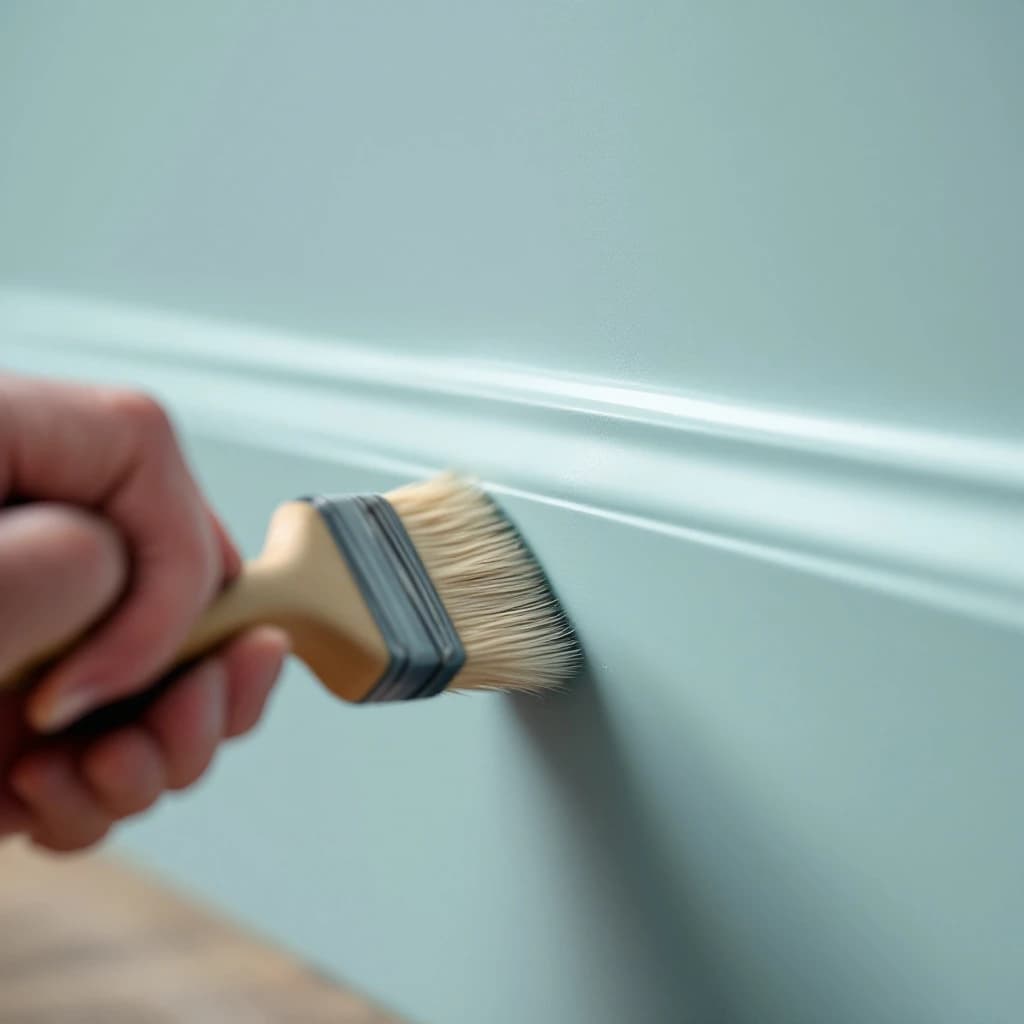
Proper preparation decides whether a paint job holds up for years or starts peeling before the year is out.
The case for painting walls before woodwork
Painting walls before woodwork is the reliable sequence for most interior rooms. You can be reasonably free with the roller near skirtings and architraves, then tighten up with a brush when you reach the woodwork stage. It reduces the risk of dragging emulsion across a freshly glossed surface.
Emulsion dries quickly and is forgiving. If a little strays onto bare timber, it wipes off or gets covered when the woodwork coat goes on. Gloss and satinwood are less forgiving; a smear of matt emulsion over a finished gloss surface shows up clearly and is awkward to correct.
For a typical Brighton and Hove flat with skirting boards, door frames, and picture rails, this order keeps the job moving without constant stopping to protect surfaces you have already finished. That sequence holds for most of the decorating work I do in Brighton.
If you are having a room done professionally, this is the approach I follow for most interior painting and decorating work, from single rooms to whole-house repaints.
When I do it the other way round
Sometimes I paint the woodwork first, particularly when period timber needs significant preparation: filling, sanding, or a coat of primer before any finish paint. Getting that work done before the walls means dust and sanding residue land on bare plaster rather than freshly painted surfaces. It is less common but occasionally the sensible call.
Older properties across BN1, BN2, and BN3 often have skirting boards and door frames that have built up layers of paint over decades. Rubbing those back creates fine dust that settles everywhere.
If the woodwork needs that level of attention, doing it first, vacuuming thoroughly, then moving on to the walls keeps the site cleaner and avoids grinding dust into wet emulsion.
Having around 20 years decorating Brighton and Hove properties gives you a feel for when the standard sequence needs adjusting; period timber with heavy build-up is one of those cases.
How to get clean lines either way
Clean lines come from masking tape, a steady cutting-in brush, and patience rather than freehand speed. Whichever surface you paint last, take time to mask the adjacent surface properly. A straight line at the junction of wall colour and gloss skirting is what most people notice first when they walk into a finished room.
Low-tack masking tape pressed down firmly along the edge of skirting or architrave gives you a reliable guide. Peel it off while the paint is still slightly tacky, not after it has fully hardened, to avoid lifting the edge.
For the cutting-in brush, load it lightly and work in short strokes. A heavily loaded brush drags and bleeds under the tape. Two thinner passes beat one thick one.
If you are weighing up whether to tackle a room yourself or call someone in, feel free to get in touch for a quote; I cover Brighton and Hove and keep disruption to a minimum.
Frequently asked questions
Should I paint the ceiling before the walls and woodwork?
Yes. The ceiling comes first. Rolling a ceiling throws spatter downwards, so doing it before the walls means any drips land on bare or primed surfaces rather than finished paintwork. Once the ceiling is done, move to the walls, then finish with the woodwork.
Do I need to sand woodwork between coats when painting a room?
Yes, a light sand between coats of gloss or satinwood makes a real difference. It knocks back any nibs or brush marks, gives the next coat something to grip, and produces a noticeably smoother finish. Use a fine-grit paper, wipe away the dust, and apply the next coat thinly.
Can I paint walls and woodwork on the same day?
You can, provided you allow proper drying time between stages. Most modern emulsions are touch dry within an hour or two, which is usually long enough before you move to the woodwork. In a cooler or less ventilated room, give it longer. Rushing this stage is one of the most common reasons paint jobs look rough at the edges.
More reading
Related service
Want this doing in your own place? See my interior painting & decorating service across Brighton & Hove.