
Matt, eggshell or silk? Indoor paint by finish
Key takeaways
- Match the finish to the room: matt for low-traffic, eggshell or satin for hallways and woodwork.
- Trade-grade paint covers better and holds up longer than most retail alternatives.
- Proper preparation matters more than the brand on the tin.
- Cheaper paint often means more coats and an earlier repaint.
- Use the same sheen level throughout a room for a consistent result.
What actually makes a paint 'the best' for interior work
The finish that works best is the one suited to that specific surface, room use, and substrate. Coverage, durability, and how well it takes to what is already on the wall matter far more than the name on the tin or the price per litre.
Most people start by asking which brand to buy. That is understandable, but it is the wrong first question.
What actually determines a good result is whether the paint is right for the surface, right for the level of use, and applied over a properly prepared substrate. A premium emulsion brushed over bare, unprepared plaster will fail just as quickly as a cheap one.
Trade-grade paints, such as those from Dulux Trade or Crown Trade, tend to offer better coverage and durability than their retail equivalents. That means fewer coats and a finish that holds up for years rather than needing a patch-up every season.
If you are planning a repaint and want to understand the full scope of the work involved, take a look at the interior painting and decorating services I offer across Brighton and Hove.
Proper preparation is what separates a paint job that lasts from one that lets you down in eighteen months.
Finish, sheen and where each one belongs
Matt emulsion suits ceilings and low-traffic walls. Eggshell and satin are better suited to woodwork, hallways, and anywhere that takes regular knocks or needs wiping down. Gloss remains a reliable option for doors, skirting, and window frames where durability is the priority.
A flat matt finish looks clean and hides minor imperfections in older plaster, which is why it works well in bedrooms and reception rooms in period properties.
Eggshell has a slight sheen and is far more washable. On walls in a kitchen, hallway, or bathroom, it is a practical choice. On woodwork, it gives a softer look than full gloss while still holding up to daily contact.
Gloss has a hard, reflective surface that resists moisture and knocks. It is still the standard for skirting boards, door architraves, and window frames, particularly in Brighton and Hove's older housing stock where those details are worth protecting. Finish choice comes up on almost every interior job I quote in Brighton and Hove.
- Matt emulsion: ceilings, bedrooms, low-traffic walls
- Eggshell: hallways, kitchens, woodwork in living spaces
- Satin: a mid-point between eggshell and gloss, good on doors
- Gloss: skirting, architraves, window frames, external-facing woodwork
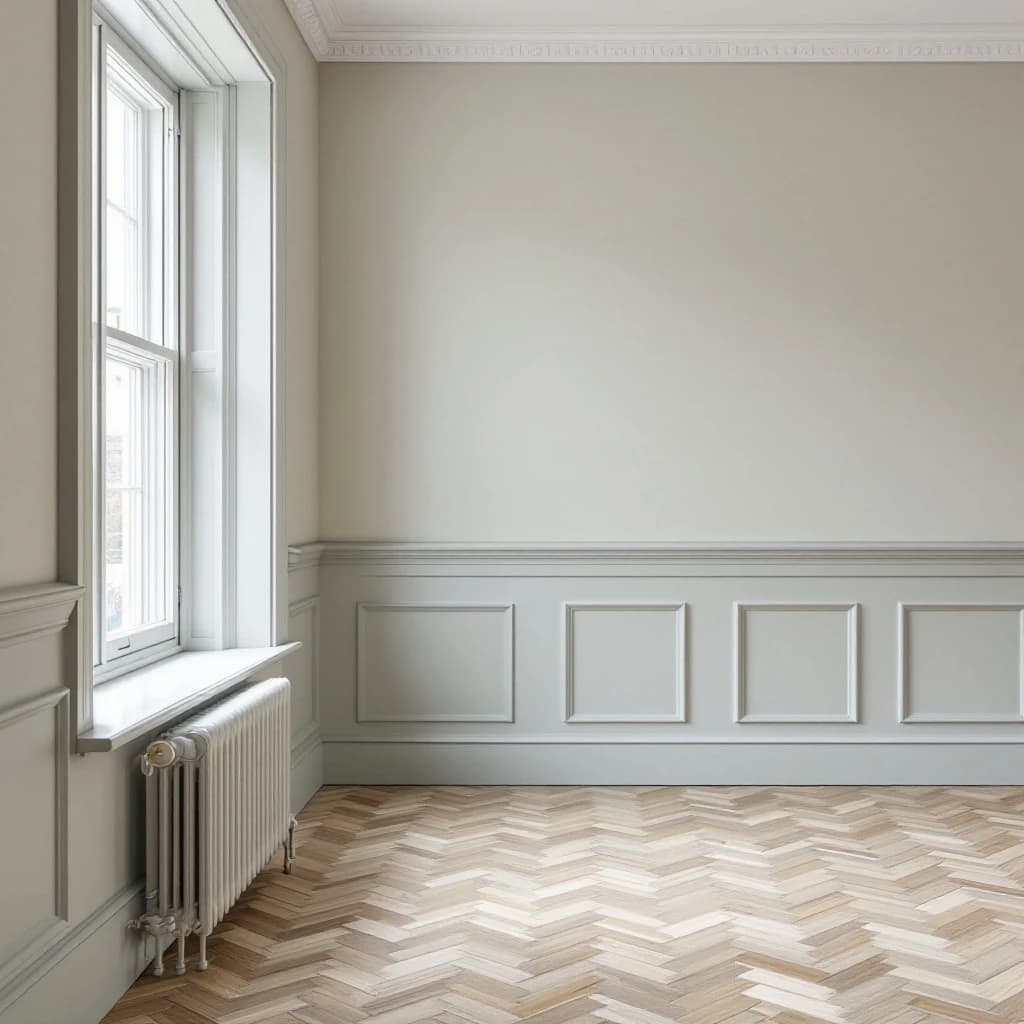
The paints I reach for most on Brighton & Hove jobs
On most jobs I use Dulux Trade or Crown Trade products. Both perform consistently on the period plaster and render common in this area. Working with trade-quality paints including Dulux and Crown means I can match the right product to what is already on your walls, rather than defaulting to whatever is on the shelf.
For walls, Dulux Trade Vinyl Matt is a solid workhorse; good coverage, a clean finish, and it takes additional coats without dragging.
For woodwork, I often use Crown Trade Fastflow or Dulux Trade Quick Dry Satinwood. Water-based products have improved considerably, and they are far more practical indoors, with lower odour and a faster drying time.
On period properties with original cornicing or panelling, I am careful about build-up. Too many thick coats over the years fills in the detail. Thinning correctly and applying more, thinner coats keeps those features sharp.
- Dulux Trade Vinyl Matt: walls in most rooms
- Crown Trade Fastflow: woodwork and skirting
- Dulux Trade Quick Dry Satinwood: interior doors and architraves
- Zinsser BIN or equivalent: stain block primer where needed
Why the paint alone is only half the story
Proper preparation is what separates a paint job that lasts from one that lets you down in eighteen months. Filling, sanding, priming, and cleaning the surface before a brush goes near the wall; these steps are where corners get cut and where most paint failures start.
Flaking paint, hairline cracks, and damp patches all need addressing before you open the first tin. Painting over them just delays the problem.
In Brighton and Hove's older housing stock, you will often find multiple layers of old emulsion, bare plaster, or uneven surfaces. Each needs a different approach. Plaster stabiliser, oil-based primer, or a mist coat may all come into play before the finishing coats begin.
If you would like a straightforward conversation about what your walls actually need, get in touch for a quote; a quick look at the job is usually all it takes to give you a clear picture.
Frequently asked questions
What is the best indoor paint for a room that gets a lot of use, like a hallway?
For a hallway, an eggshell or satin finish is well suited to the job. It is washable, holds up to scuffs, and still looks clean between repaints. On the woodwork, gloss or a hard-wearing satinwood is a reliable option. Avoid flat matt in these areas; it marks easily and does not clean well.
Is expensive paint worth it, or does preparation matter more?
Both matter, but preparation comes first. A trade-grade paint will give you better coverage and durability than a budget retail tin, which matters over the long run. That said, even a quality paint applied over poorly prepared surfaces will fail early. Get the prep right, then invest in a decent product. As a decorator who works with trade-quality paints including Dulux and Crown, with around 20 years of local experience, matching the right product to the surface is part of the job.
Can I use the same paint on walls and woodwork?
Not ideally. Walls and woodwork have different demands. Standard emulsion is too soft for skirting boards and door frames; it will mark and wear quickly in those areas. Use an appropriate eggshell, satinwood, or gloss on woodwork. Some ranges offer a multi-surface version, but for a finish that holds up for years, a dedicated product for each surface is the better approach.
More reading
Related service
Want this doing in your own place? See my interior painting & decorating service across Brighton & Hove.