
Key takeaways
- Assess the wall condition before choosing any colour
- Period features reward contrast, not competition
- Matt and eggshell finishes suit older plaster well
- Proper preparation is what makes the result hold up
- One or two coats on bare plaster is rarely enough
Start with the wall, not the paint chip
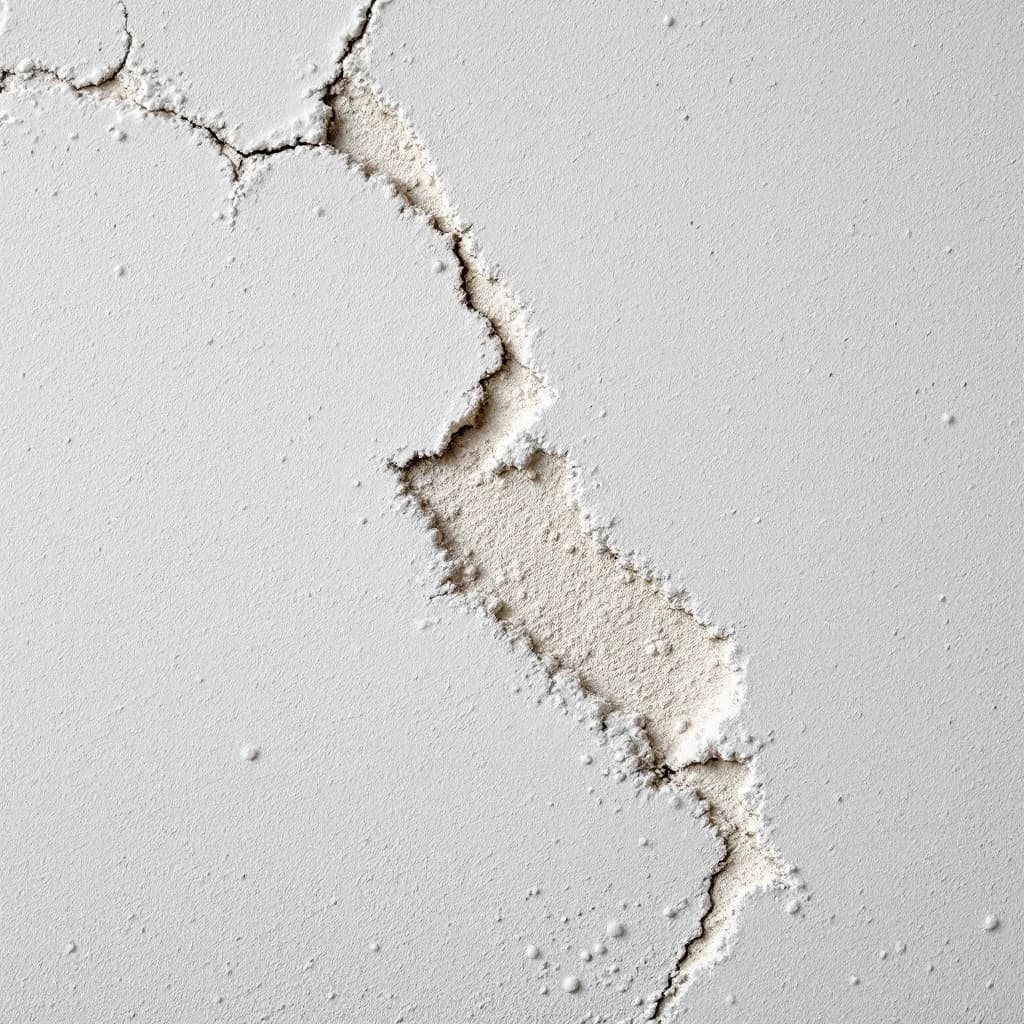
Before you settle on a colour, look hard at the wall itself. Cracks, staining, bare patches or old flaking paint will all show through a new coat. Fixing the surface first is what makes the decoration worth doing. Picking a shade before the wall is ready is working backwards.
I see it regularly in Brighton and Hove's older housing stock: someone has chosen a beautiful deep tone, but the walls haven't been properly assessed first. The result looks tired within months, and the colour gets the blame when the real issue was underneath.
Period plaster moves. It settles, it cracks at cornices and ceiling roses, and it often carries years of previous decoration that needs addressing. Before any brush touches a wall, the surface needs a close look in decent light.
Once you know what you're working with, colour choices become easier. You're selecting a finish for a specific wall in a specific room, not browsing abstract swatches.
Proper preparation is what separates a finish that looks good in a week from one that holds up for years.
Period features and awkward proportions: working with what you have
A chimney breast, alcoves, a deep bay window or a low ceiling all change how colour sits in a room. These aren't problems to work around; they're the bones of the space and they reward a bit of thought.
In a room with high ceilings, a slightly deeper tone on the walls can bring the proportions back to human scale without touching the ceiling colour. In a narrow room, keeping walls lighter and saving the depth of colour for a chimney breast can make the space feel balanced rather than compressed.
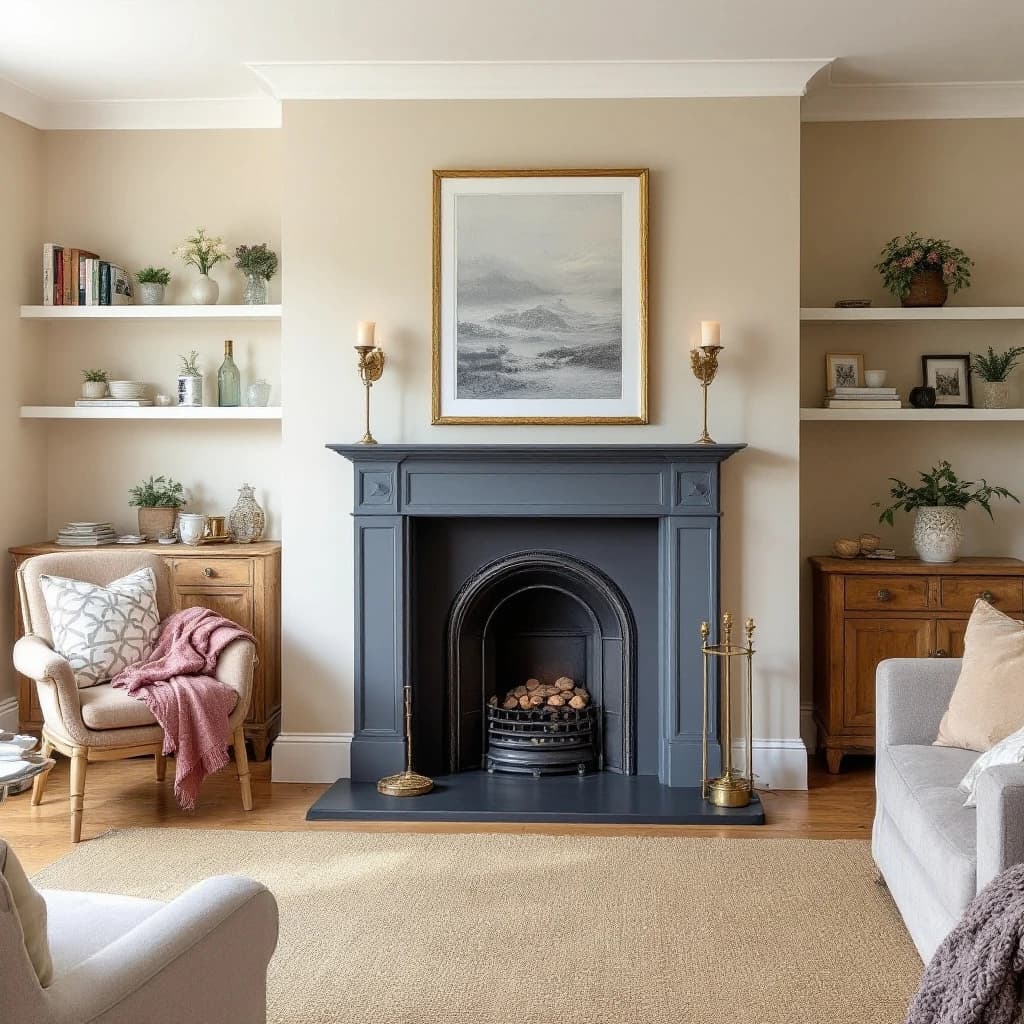
Alcoves flanking a chimney breast are a classic pairing in Brighton's Victorian and Edwardian terraces. Painting the recesses a shade or two deeper than the surrounding walls is a simple approach that works consistently well without anything complicated.
Colour, finish and a bit of contrast: what actually works in a living room
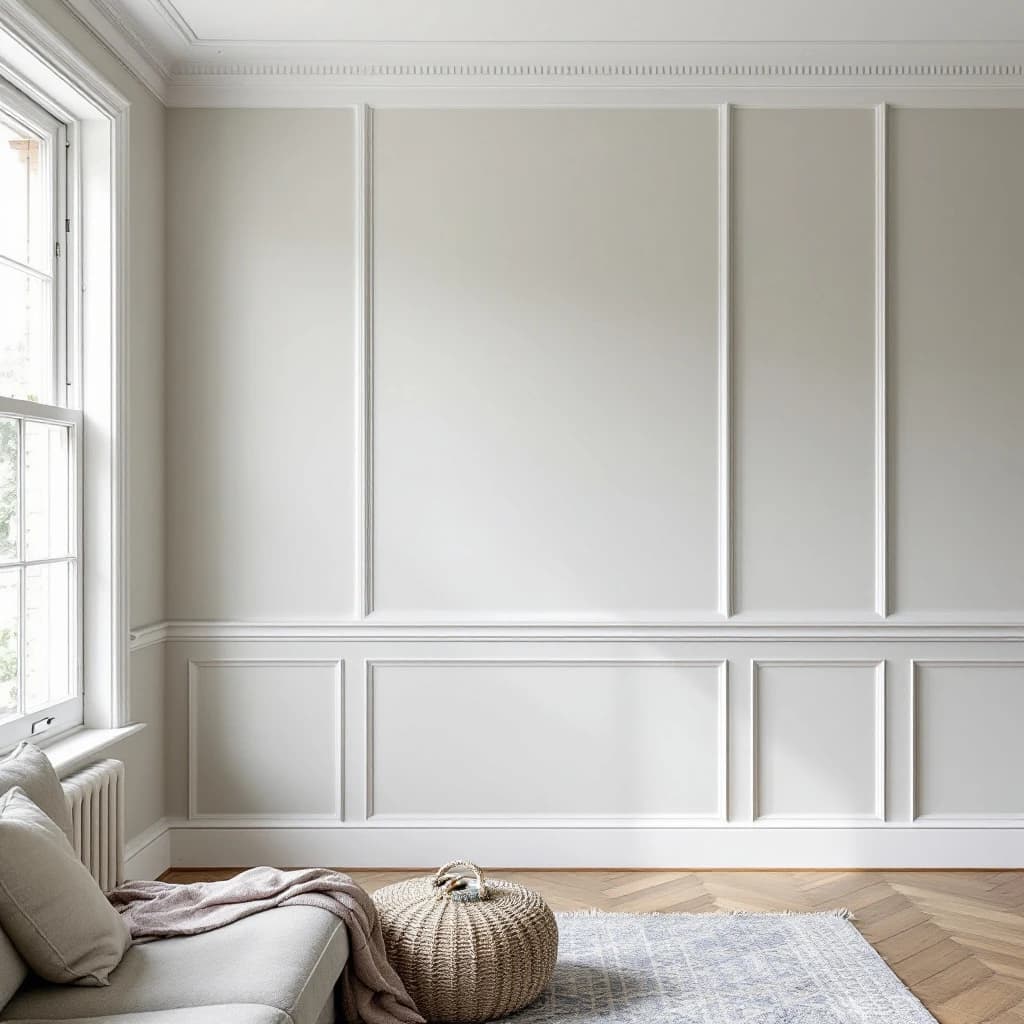
Colour and finish are two separate decisions, and finish often matters more than people realise. A matt or flat finish tends to suit period walls because it absorbs light rather than reflecting imperfections. Eggshell sits between matt and silk and handles occasional marks without looking plastic. Avoid high sheen on uneven older plaster.
For contrast, a chimney breast painted in a noticeably different tone from the surrounding walls is a reliable option that suits both contemporary and traditional schemes. It doesn't require elaborate techniques; the architecture does the work for you.
As for colour itself, cooler neutrals with a slight grey or blue undertone tend to hold well in Brighton rooms, where the light coming off the sea can flatten warmer tones in a way that surprises people. That said, every room is different; test a decent-sized patch and look at it morning and evening before committing.
If you're unsure about the scope of the job or want to talk through whether a full repaint or a targeted refresh makes more sense, my interior painting and decorating work covers both.
When preparation decides the result
Preparation is not the exciting part, but it is the part that determines how long the finish lasts. Filling, sanding, priming bare patches and allowing adequate drying time between coats adds time to the job. Corners cut here show up within the first year, sometimes sooner. Proper preparation is what separates a good result from a lasting one.
On older plaster, bare or newly filled areas need a mist coat or diluted first coat before any full-strength paint goes on. Skipping this step means the finish coats are absorbed unevenly, and the colour looks patchy no matter how carefully the final coat is applied.
The number of coats required depends on the condition of the wall, the colour being used and whether you're making a significant change. One or two coats on bare or heavily repaired plaster is rarely enough for an even, solid result.
With around 20 years working on period and Edwardian properties across Brighton and Hove, the principle stays the same on every job: corners not cut, materials suited to the surface, and as little disruption as possible while the work is done. If you'd like to talk through a living room repaint, drop me a message or give me a call and I'll be glad to help.
Frequently asked questions
Should I paint all four walls the same colour or pick one to stand out?
Either approach can work well. In a room with a chimney breast or strong alcoves, painting one surface a deeper tone than the others tends to suit the architecture and gives the room a focal point without overcomplicating it. In a smaller or more regular room, keeping all four walls the same colour and varying the tone on woodwork or ceiling can feel calmer. It comes down to the proportions and features you're working with.
What paint finish is best for living room walls in an older property?
Matt or flat finishes are well suited to period walls because they don't catch and amplify surface irregularities the way shinier finishes do. Eggshell is a practical middle ground if you want a little more durability. I'd steer away from silk or satin on uneven plaster; it tends to highlight every bump and patch rather than settle quietly into the wall.
How many coats does a living room wall usually need for a solid, even result?
On a well-prepared, previously painted wall in good condition, two full coats are usually sufficient. On bare plaster, newly skimmed or heavily repaired areas, you'll typically need a mist coat or thinned first coat followed by at least two further coats. Trying to cover everything in one heavy coat rarely ends well; thin, even coats with proper drying time between them give a far more consistent finish.
More reading
Related service
Want this doing in your own place? See my interior painting & decorating service across Brighton & Hove.