
How to Choose the Right Paint for a Brick or Stone Interior Wall
Key takeaways
- Standard emulsion traps moisture and will peel on bare masonry.
- Use a breathable, vapour-permeable paint formulated for interior masonry.
- Proper preparation matters more than the paint brand you choose.
- A matt or low-sheen finish suits most period interior brick and stone.
- Always consolidate dusty or friable surfaces before any paint goes on.
Why Interior Brick and Stone Walls Need a Different Approach
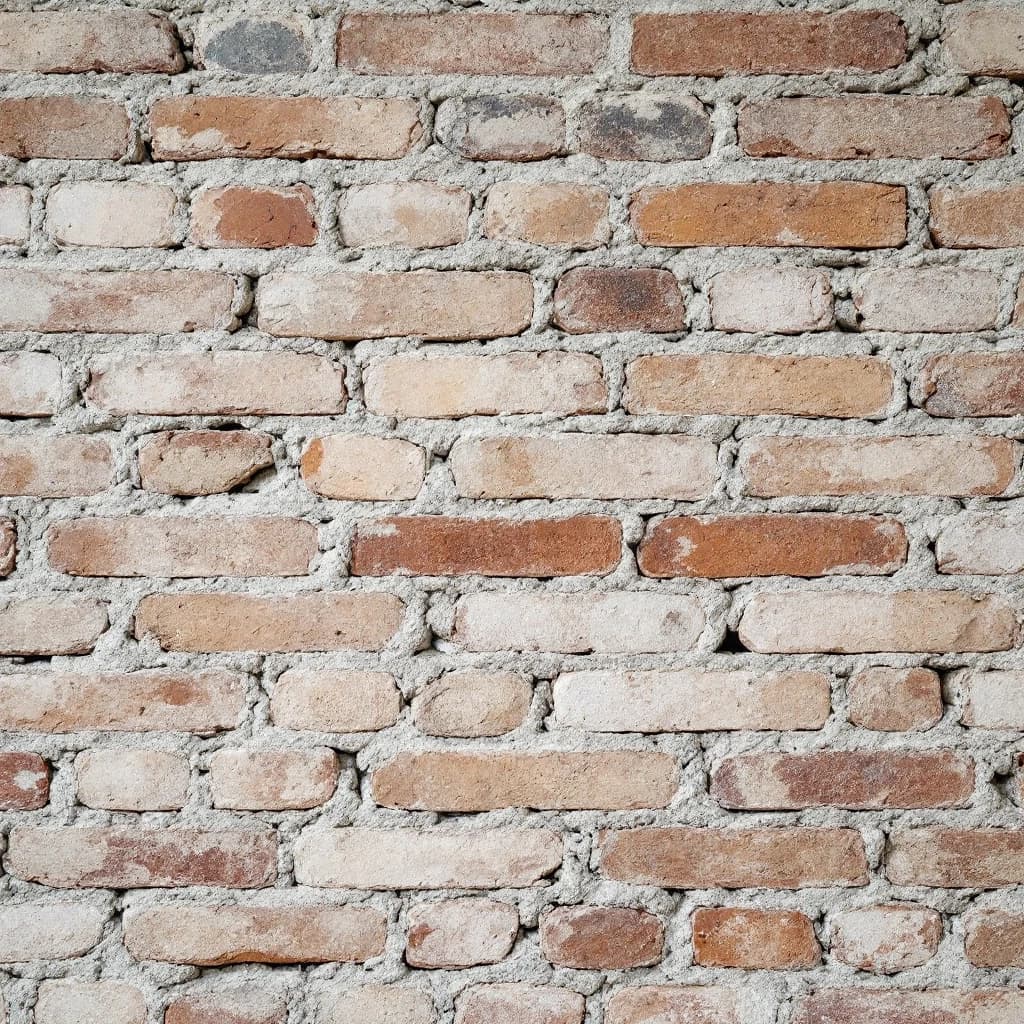
Brick and stone are porous and actively move moisture. Paint that works perfectly on plaster or plasterboard can fail badly on bare masonry, trapping damp behind a sealed film and eventually peeling or blistering. The material itself dictates the product, not the other way around.
Most interior walls in Brighton and Hove are plastered before painting, so the masonry underneath never sees a brush. In period properties, though, exposed brick or stone is common: Victorian cellar walls, converted outbuildings, original chimney breasts left bare for character. Exposed masonry turns up most in the period properties I decorate around Brighton.
Those surfaces breathe. They absorb and release moisture with the seasons, and in a coastal climate that movement is more pronounced than it would be inland.
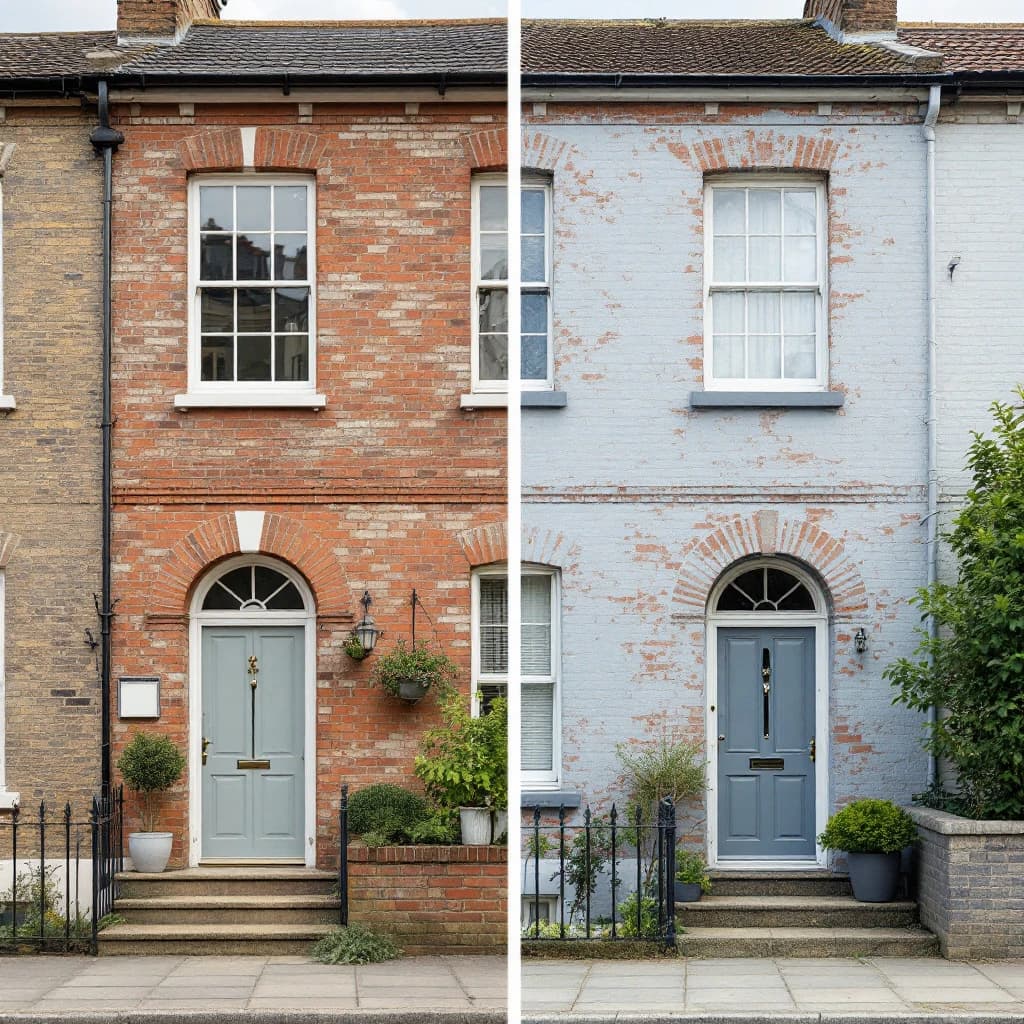
A conventional wall paint forms a relatively sealed film. On masonry, that film becomes a barrier the wall cannot breathe through, and pressure builds behind it. The result is flaking, bubbling, and damp patches that look worse than the unpainted wall ever did.
Proper preparation matters more than the paint brand you choose.
The Problem With Using Standard Emulsion on Bare Masonry
Standard vinyl or silk emulsion is not formulated for the alkalinity or porosity of bare brick and stone. Applied directly, it soaks in unevenly, raises the surface, and rarely bonds well enough to last. On a damp or mildly efflorescent wall, it will lift within months.
The alkalinity of cement mortar and some stone types can also break down the binders in ordinary emulsion over time. You end up with a chalky, powdery finish rather than a clean painted surface.
Silk and satin finishes make this worse. The higher the sheen, the less vapour can pass through, so moisture finds the weakest point in the film and pushes through there instead.
This is not a minor technical detail; it is the single most common reason a DIY paint job on interior brick fails within a year or two.
Choosing the Right Paint: What Actually Works on Interior Brick and Stone
A breathable, vapour-permeable paint is the right starting point for interior brick or stone. Mineral paints, limewash, and specialist masonry emulsions all allow the wall to move moisture without breaking the film. The finish should be matt or very low sheen to maximise permeability and suit the texture of the surface.
Mineral paints, such as silicate-based products, bond chemically with the masonry rather than sitting on top of it. They are durable, deeply matt, and highly breathable; well suited to stone walls in older properties where damp is an ongoing consideration.
Limewash is a reliable option for brick, particularly in period interiors where a softer, more varied finish is wanted. It is fully breathable, naturally anti-fungal, and looks at home on Victorian stock brick in a way that modern emulsion rarely does.
Specialist interior masonry emulsions from trade ranges, including products in the Dulux and Crown trade ranges, sit between the two: easier to apply than mineral paint, more breathable than standard emulsion, and available in a wide range of colours. Because I work with trade-quality paints including Dulux and Crown, I can match the right product to your specific surface rather than reaching for whatever happens to be on the shelf.
- Mineral (silicate) paint: chemically bonds, fully breathable, very durable
- Limewash: traditional, soft finish, highly breathable, suits period brick
- Specialist masonry emulsion: trade-grade, breathable, wide colour range
- Avoid: standard vinyl emulsion, silk or satin finishes on bare masonry
Preparation and Application: Where Most DIY Jobs Go Wrong
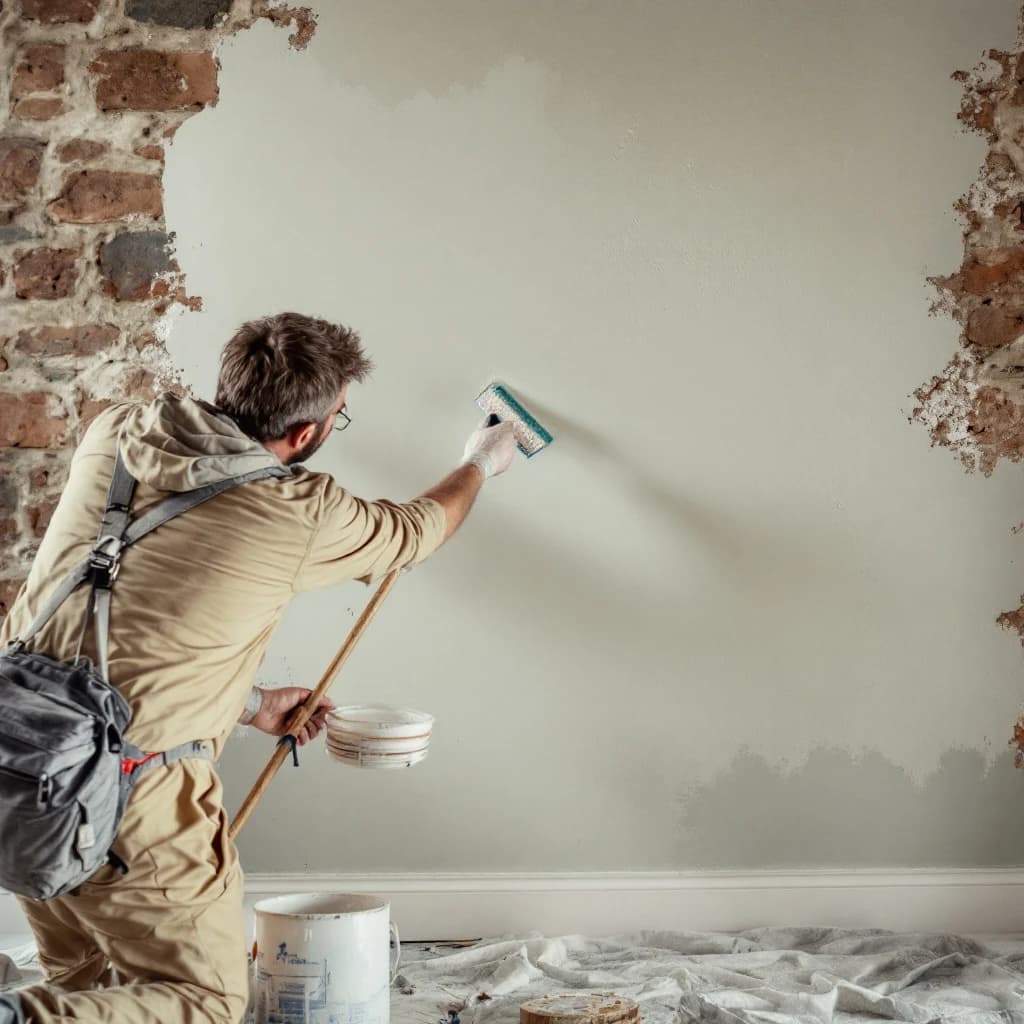
Even the right paint will fail if the surface is not properly prepared. Loose mortar, dust, salts, and old failed coatings all need addressing before a brush goes near the wall. Skipping preparation is where most interior brick and stone paint jobs go wrong, and it cannot be patched over afterwards.
Start by brushing down the wall thoroughly with a stiff bristle brush. Remove any loose mortar, flaking paint, or powdery residue. If there is efflorescence (white salt deposits), treat it and allow the wall to dry fully before proceeding.
Dusty or friable surfaces need a stabilising primer first. Applying paint directly to a crumbling or powdery surface means the paint bonds to the dust, not the masonry, and the whole job lifts away together.
For application, a thick-pile roller covers the texture of brick and mortar joints more evenly than a brush alone, but a brush is still needed to work paint into the deeper joints and any recesses. Two coats are standard; three may be needed on very porous or uneven surfaces.
If you are unsure whether a wall is dry enough, or whether the existing surface is stable, it is worth getting a professional eye on it before committing to a product. You can see the full range of interior decorating work I cover to get a sense of whether your project fits.
Frequently asked questions
Can I use normal emulsion paint on an interior brick wall?
It is not recommended. Standard emulsion is not formulated for the porosity or alkalinity of bare masonry. It tends to absorb unevenly, bond poorly, and trap moisture behind the film, which leads to peeling or blistering. A breathable masonry paint or mineral paint is a far more reliable option.
Do I need to seal brick before painting it inside?
Not with a conventional sealer, no. A sealer blocks the pores and stops the wall breathing, which causes exactly the problems you are trying to avoid. On a dusty or crumbling surface, use a stabilising primer instead; this consolidates the surface without sealing it completely, so the wall can still move moisture.
What finish is best for painted interior brick walls?
Matt or very low sheen. Higher-sheen finishes are less vapour-permeable, which reduces breathability on a masonry surface. A matt finish also sits more naturally with the texture of brick and stone, and it tends to hide minor surface irregularities better than a sheen would. If you would like advice on a specific wall, get in touch for a quote.
More reading
Related service
Want this doing in your own place? See my interior painting & decorating service across Brighton & Hove.