
Communal hallway colour schemes that hold up in managed blocks
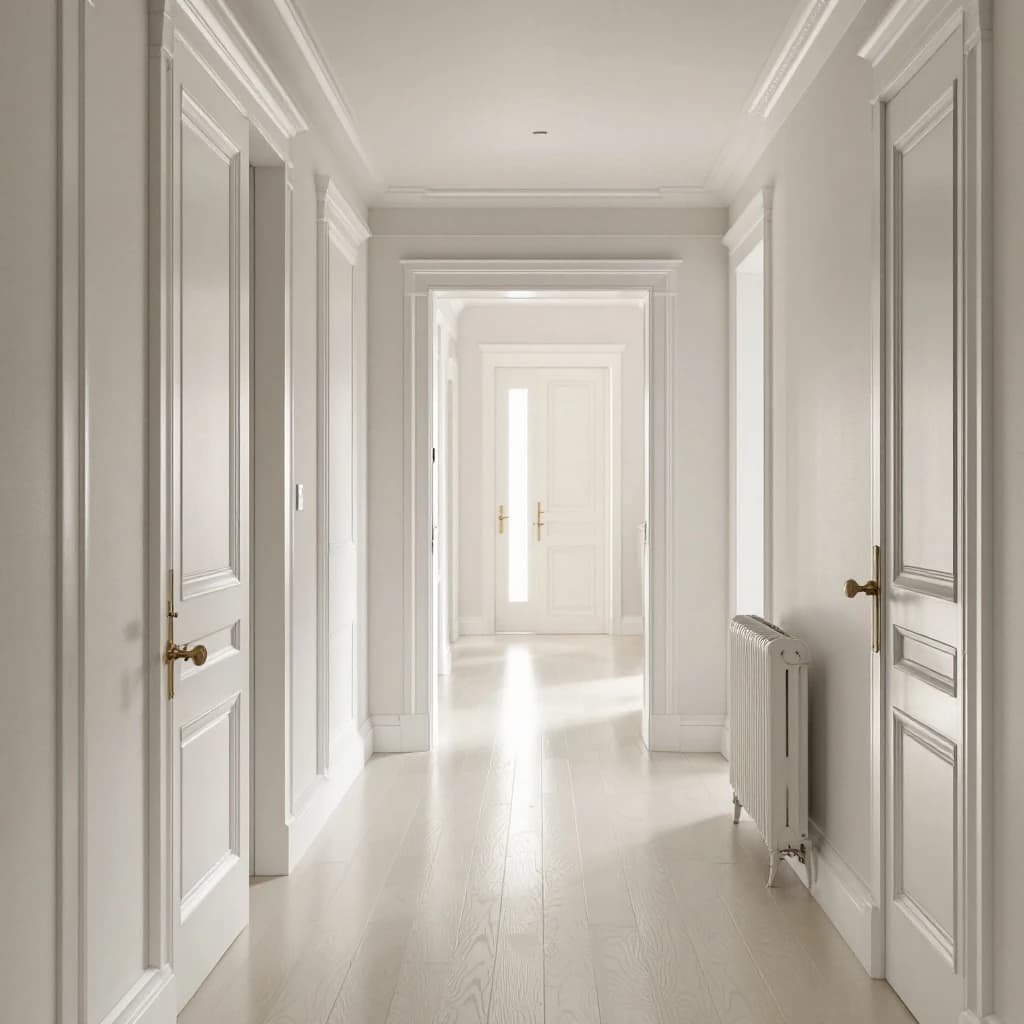
Key takeaways
- Use a scrubbable mid-sheen or eggshell finish below the dado, flat matt above.
- Neutral mid-tones hide marks better than very pale or very dark colours.
- A lighter upper wall visually lifts low-ceilinged or windowless stairwells.
- Agree the scheme in writing with the managing agent before a brush touches the wall.
- Proper preparation matters more than colour; it's what makes a repaint last.
Why colour choice matters more in a shared hallway than anywhere else
A communal hallway takes punishment from bags, bikes, buggies and constant footfall, and the colour scheme has to survive all of it. Pick wrong and you're repainting in two years. Pick right and the finish holds up, marks stay manageable, and residents are happy.
A private sitting room might be repainted every five or six years at the owner's discretion. A communal hallway in a managed block has no single owner keeping an eye on it, and the wear is continuous.
The colour you choose affects how quickly the walls start to look tired, how easy they are to touch up, and how long a full repaint can reasonably be deferred. These are practical decisions, not just aesthetic ones.
Managing agents and leaseholders often focus on shade first and finish second. In my experience, it's usually the other way round: the finish determines how scrubbable the surface is, and the tone determines how well it hides everyday marks.
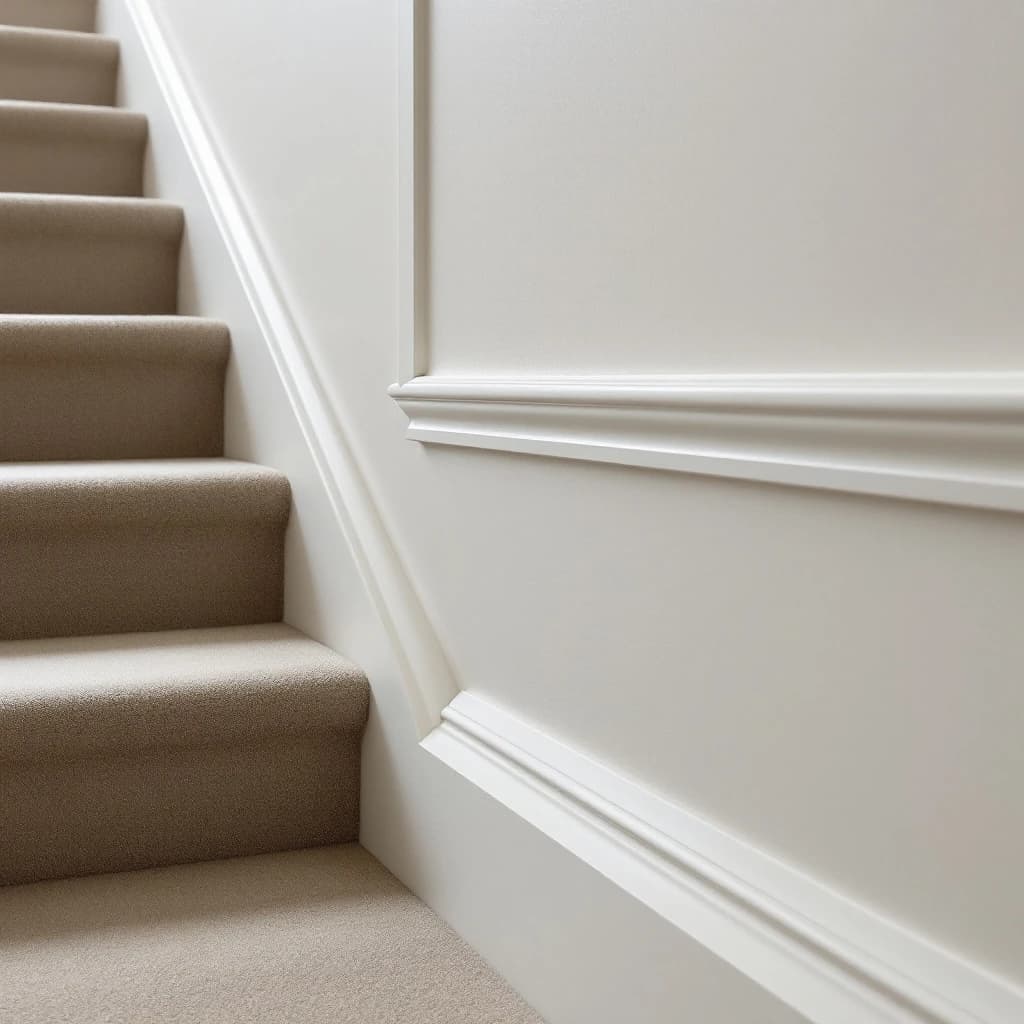
A neutral mid-tone hides scuffs and marks far better than a very pale shade.
Colours and finishes that work in practice
A neutral mid-tone on the walls paired with white or off-white woodwork is a reliable option for most communal hallways. Mid-tones disguise scuffs without making the space feel heavy, and white woodwork stays crisp. The finish matters as much as the colour: walls need to be washable.
For the walls themselves, a mid-sheen or soft-sheen emulsion is worth considering below the dado line, where contact is highest. Above the dado, a flat matt in the same or a slightly lighter tone looks clean and keeps the space feeling open.
Woodwork, including skirting boards, door frames and handrails, needs an eggshell or hard-wearing satinwood. Gloss shows every knock and drip in a stairwell; a quality eggshell cleans up well and looks more considered.
For period mansion blocks and Victorian terraces, which make up a good share of the managed stock across BN1, BN2 and BN3, warm greiges and soft stone tones tend to suit the architecture better than cool contemporary greys. They also age more gracefully between full repaints. Most of my communal and block decorating is in exactly this kind of stock across Hove and Brighton.
- Soft-sheen or mid-sheen emulsion below the dado (scrubbable)
- Flat matt emulsion above the dado in a matching or lighter tone
- Eggshell or satinwood on all woodwork and handrails
- Warm neutrals, greiges or soft stone for period properties
- White or warm off-white for ceilings and upper coving
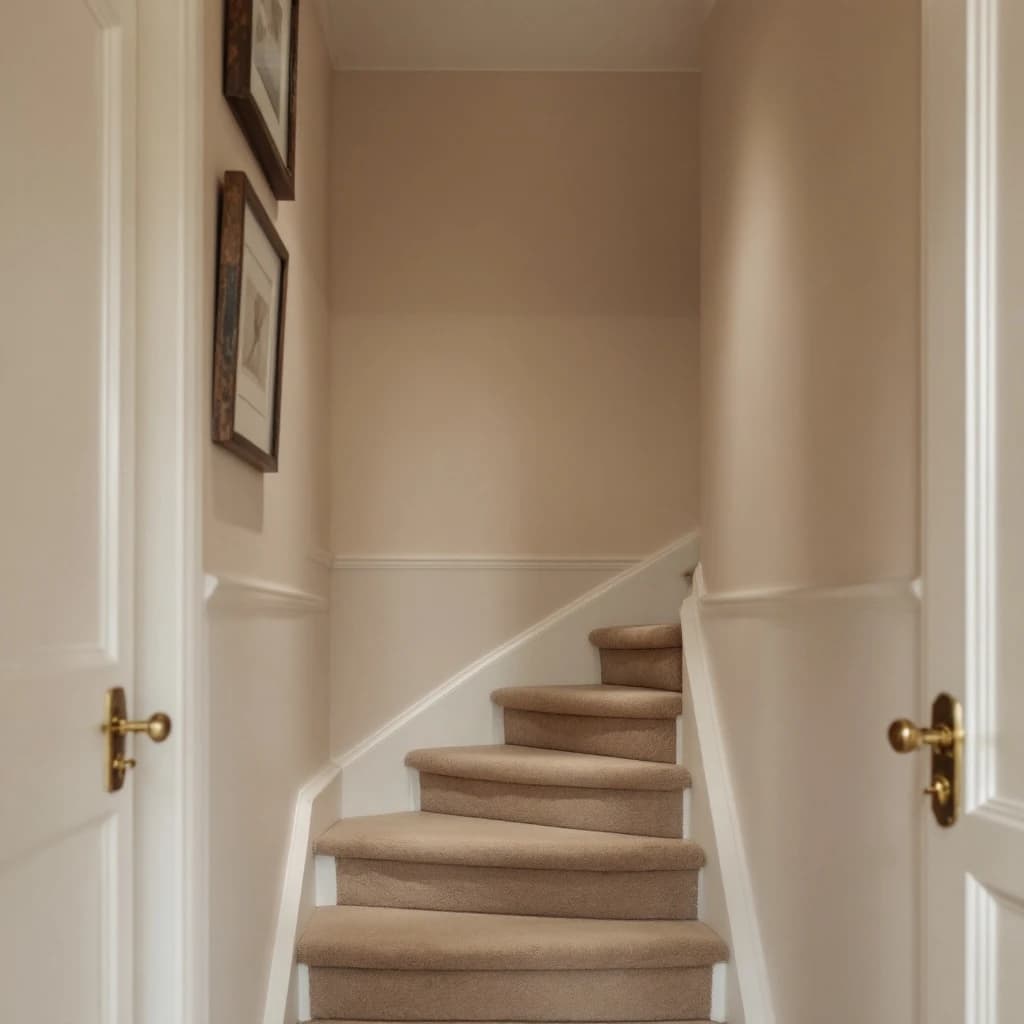
Dealing with narrow, dark or windowless stairwells
Plenty of communal stairwells in Brighton & Hove have limited or no natural light. Going very pale doesn't always solve the problem; a stark white can actually look greyer than a considered warm neutral under artificial light.
A practical approach is to use a slightly lighter shade on the upper walls and ceiling than on the lower section. The contrast is subtle but it draws the eye upward and makes a narrow stairwell feel less enclosed.
Mirrors and lighting are outside a decorator's scope, but paint sheen plays a role too: a touch more sheen on upper walls reflects artificial light back into the space. I cover this in more detail in my post on repainting a communal stairwell in Hove, including what to expect from the preparation and access side of the job.
Getting a scheme agreed and decorated with as little disruption as possible
The practical side of a managed block repaint is as important as the colour. Residents need access to their front doors throughout, and the scheme needs sign-off before work starts. Sorting both in advance keeps the job straightforward and avoids callbacks.
Agree the colour scheme in writing with the managing agent before anything is ordered. For blocks with multiple leaseholders, a simple sample board with two or three options tends to move the decision along more quickly than an open-ended discussion.
On the job itself, proper preparation is what makes the finish last: filling, sanding, priming bare patches and taping off correctly. Corners cut at the preparation stage always show within a year, especially in a hallway that gets daily use.
I'm fully insured and have been decorating communal hallways and managed blocks across Brighton & Hove for around 20 years, using trade-quality paints including Dulux and Crown. If you're a managing agent or leaseholder planning a communal repaint, ask for an estimate with a few details and I'll come out to take a look.
Frequently asked questions
What's the most practical paint finish for a communal hallway?
A scrubbable soft-sheen or mid-sheen emulsion on the walls, with an eggshell or satinwood on all woodwork. Flat matt looks good above the dado but isn't washable, so it's best reserved for the upper walls where contact is lower. The key is matching the finish to the level of wear each surface gets.
Should a shared hallway have a dado rail, and does it affect the colour scheme?
Many period properties in Brighton & Hove already have dado rails fitted, and they're worth keeping where they exist. They give you a natural break to switch from a scrubbable finish below to a softer finish above, and they allow two tones without the scheme looking arbitrary. If there's no dado rail, a single colour throughout in a mid-sheen works well.
How do I get all leaseholders to agree on a communal hallway colour?
Keep the choice narrow. Present two or three samples on the actual wall rather than a colour card, because paint always looks different in situ, especially under artificial light. Neutral mid-tones are generally easier to reach agreement on than bold or very pale shades. If a managing agent is involved, route the decision through them to avoid the scheme stalling.
More reading
Related service
Want this doing in your own place? See my communal & block decorating service across Brighton & Hove.