
Accent Walls: Do They Actually Work, and Are They Worth Painting?
Key takeaways
- Choose a wall with a natural focal point, not just a random one.
- Eggshell or matt emulsion both work; match the finish to the room's use.
- Proper preparation matters as much as the colour you choose.
- Period properties need careful cutting-in around coving and picture rails.
- A decorator earns their fee on tricky edges and awkward rooms.
What makes a good accent wall, and what makes one a mistake
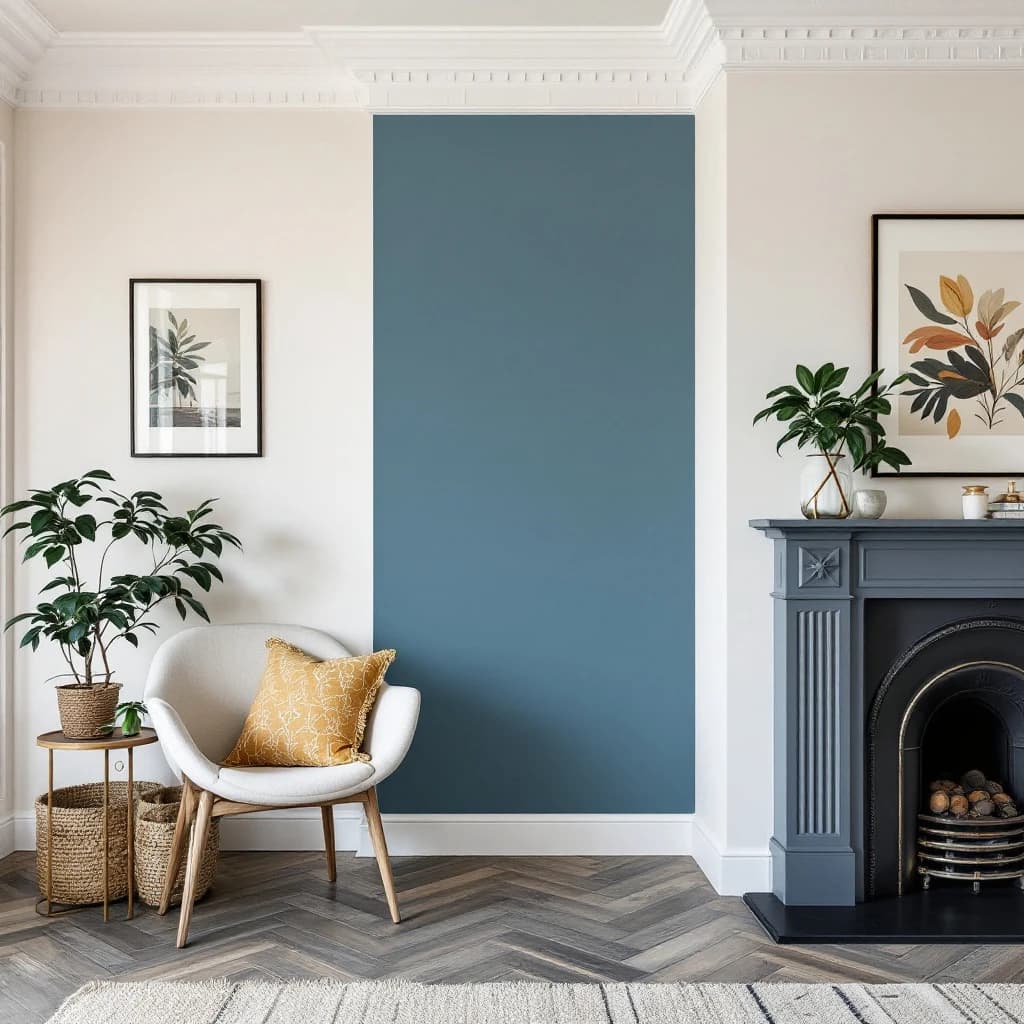
An accent wall works when it reinforces a room's natural focal point. A chimney breast, the wall behind a bed, or the wall you face when you walk in are all strong candidates. Paint a random wall for the sake of it and the effect feels arbitrary rather than considered. Pick the right wall first, then choose your colour.
The most common mistake I see is choosing a wall because it seemed like a good idea, rather than because the room calls for it. If there is no obvious anchor point, a single dark wall can make a space feel unbalanced rather than characterful.
A chimney breast is usually a reliable option in Brighton and Hove period properties. It already draws the eye, so a deeper colour simply confirms what the room is already doing architecturally. I see this most on interior work in Brighton, where period rooms already have strong features to build around.
Colour choice matters too. A shade that reads well on a small chip can look very different across a full wall, especially in our older bay-fronted rooms where light shifts through the day. Always test a large sample before committing.
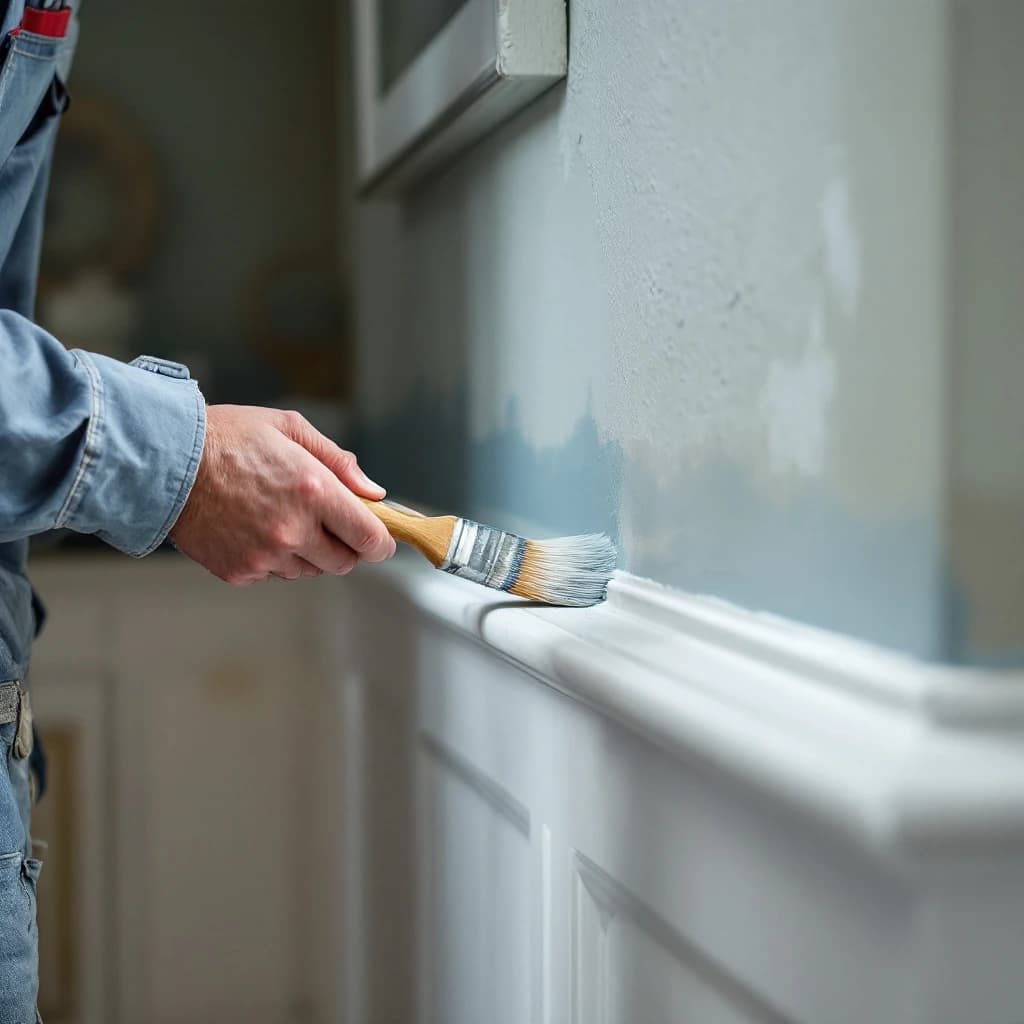
The colour is the easy part; the preparation and the edges are where accent walls succeed or fail.
Colour, finish, and prep: the practical side of accent wall painting
The finish you choose affects how the wall looks and how long it holds up. Matt emulsion suits most living rooms and bedrooms. Eggshell or a mid-sheen finish is worth considering in a hallway or anywhere that picks up more scuffs. The colour is the easy part; the preparation and the edges are where accent walls succeed or fail.
Proper preparation is the same here as on any other wall: fill any cracks or holes, sand them back, prime if the surface needs it. A deep colour applied over a patchy or previously glossy surface will show every imperfection far more obviously than a pale one.
If you are covering a light wall with something noticeably darker, budget for at least two full coats. Rushing with one coat and touching up is rarely invisible.
For anyone weighing up the scope of the job, my interior painting and decorating work covers accent walls as part of a wider room repaint or as a standalone job, whichever suits.
- Matt emulsion: good for low-traffic bedrooms and living rooms
- Eggshell: durable, slight sheen, suits hallways and family rooms
- Satinwood: occasionally used on panelled accent walls or woodwork-heavy features
Getting the edges right in period properties
Cutting in cleanly is where DIY accent walls often let themselves down. In a modern room with straight, smooth walls it is manageable. In a Brighton or Hove period property you are usually dealing with coving, picture rails, and walls that have had several layers of paint over the years.
Masking tape helps but it is not the whole answer. The tape needs to go onto a sound surface, pressed down firmly at the edge; if the existing paint is at all loose, the tape will lift it when you pull it away.
Along a picture rail or cornice, a steady hand and a decent cutting-in brush does more reliable work than tape alone. Taking the time to do it properly means the finished edge stays crisp for years rather than looking ragged within a few months.
When to do it yourself and when to bring in a decorator
A single accent wall on a plain, modern surface is a reasonable DIY project if you are comfortable with a brush and patient about preparation. Bring in a decorator when the wall has complicated edges, when the surface needs more than basic filling, or when you want the result to hold up for years without touching up every season.
Around twenty years working in Brighton and Hove has shown me that the jobs people most often wish they had handed over are the ones with coving, deep colours, and walls in older properties that look flat but are not.
That is not a reason to avoid accent walls; it is a reason to be honest about what the job involves before you start.
If you are thinking about an accent wall, whether as part of a full room repaint or on its own, talk through your project. A quick conversation about the room, the wall, and what you are hoping to achieve usually makes the decision straightforward.
Frequently asked questions
Which wall should I paint as an accent wall?
Choose a wall that already draws the eye: a chimney breast, the wall a bed sits against, or the wall you face when you enter the room. Avoid picking a wall at random. The accent should confirm the room's natural focal point, not compete with it.
What paint finish works best for an accent wall?
Matt emulsion works well in bedrooms and living rooms where the wall will not take much wear. Eggshell or a mid-sheen finish is more practical in hallways or rooms with higher traffic, as it is easier to wipe down. Whatever finish you choose, prepare the surface properly first; a deep colour on a poorly prepared wall will show every imperfection.
Can I paint an accent wall in a rented property in Brighton or Hove?
That depends on your tenancy agreement. Some landlords are happy for tenants to redecorate provided the work is done to a reasonable standard; others require the property to be returned to its original state. Check with your landlord or managing agent before starting. If permission is granted and you want the job done neatly and without damage to existing surfaces, it is worth having a decorator do it.
More reading
Related service
Want this doing in your own place? See my interior painting & decorating service across Brighton & Hove.